
Scorched rice
Crisp rice crust prized across many world cuisines.
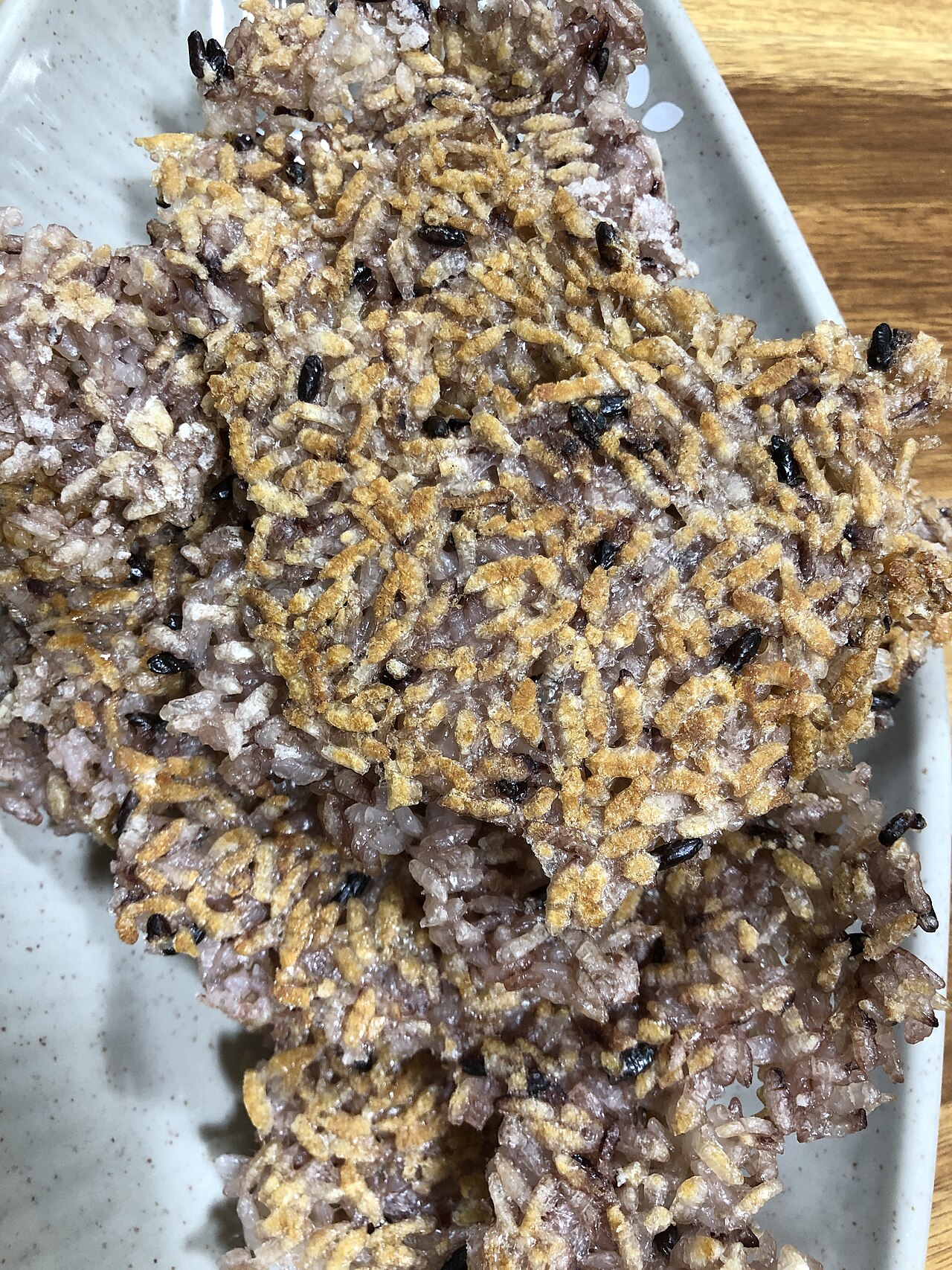
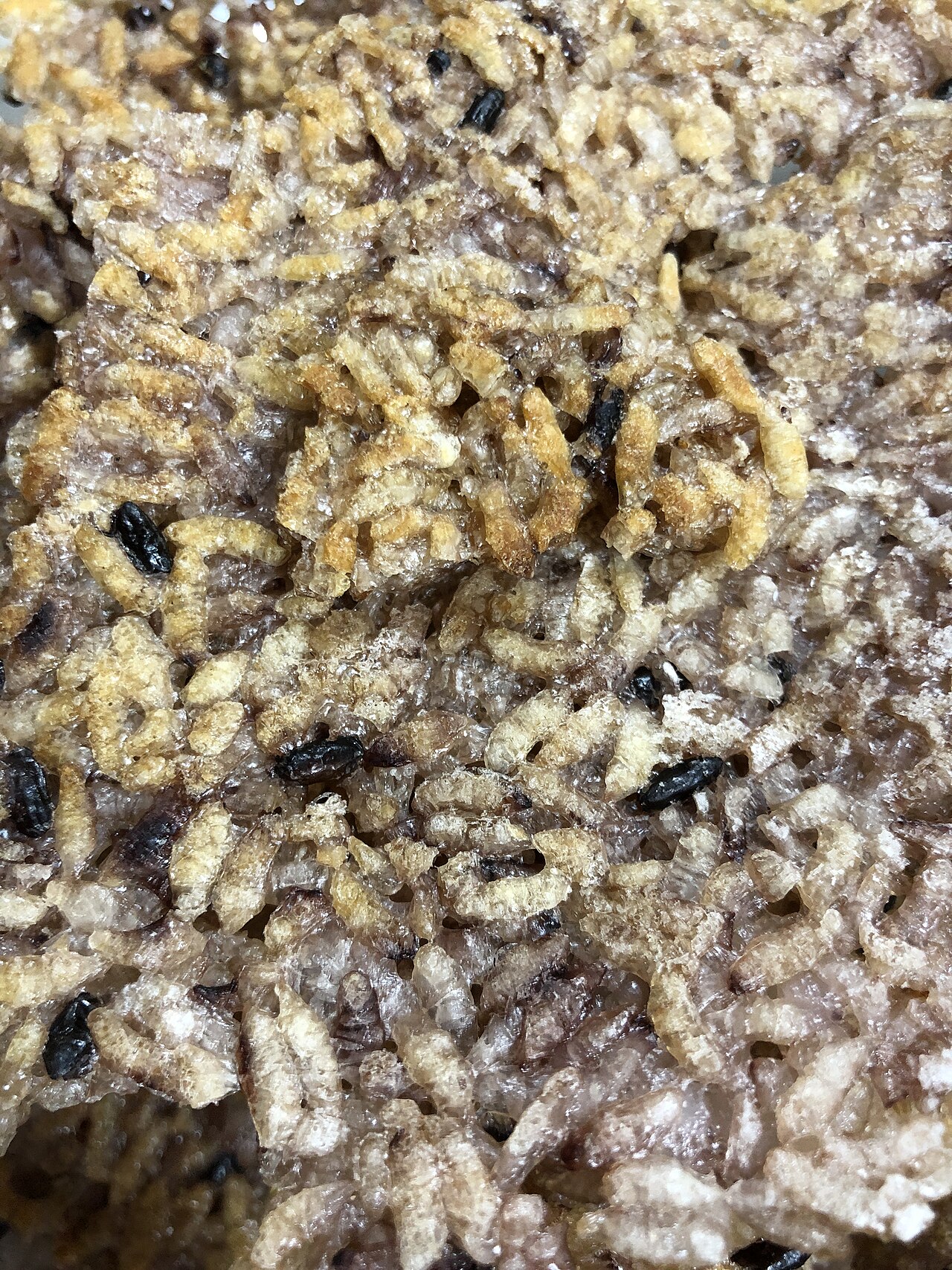
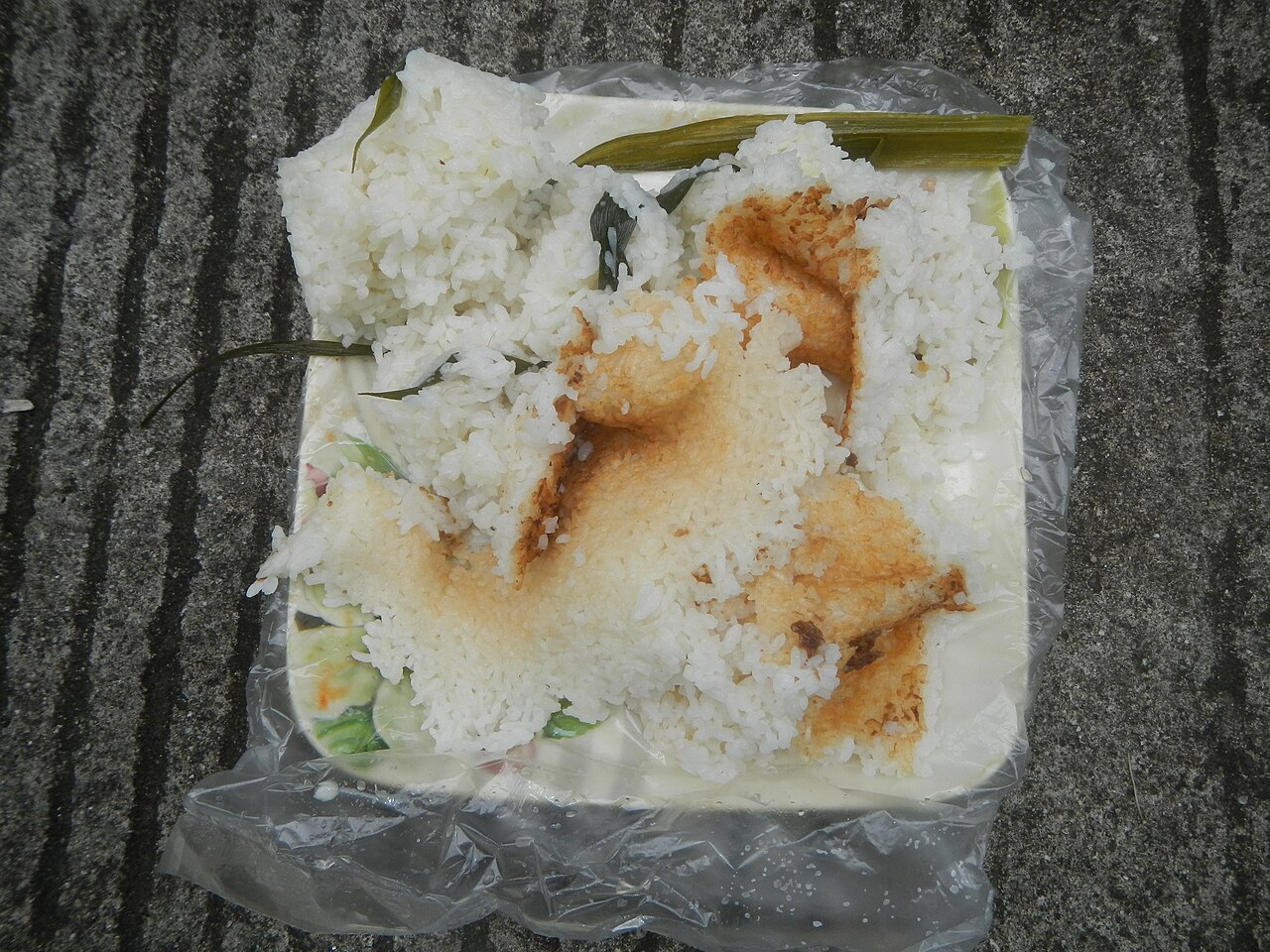
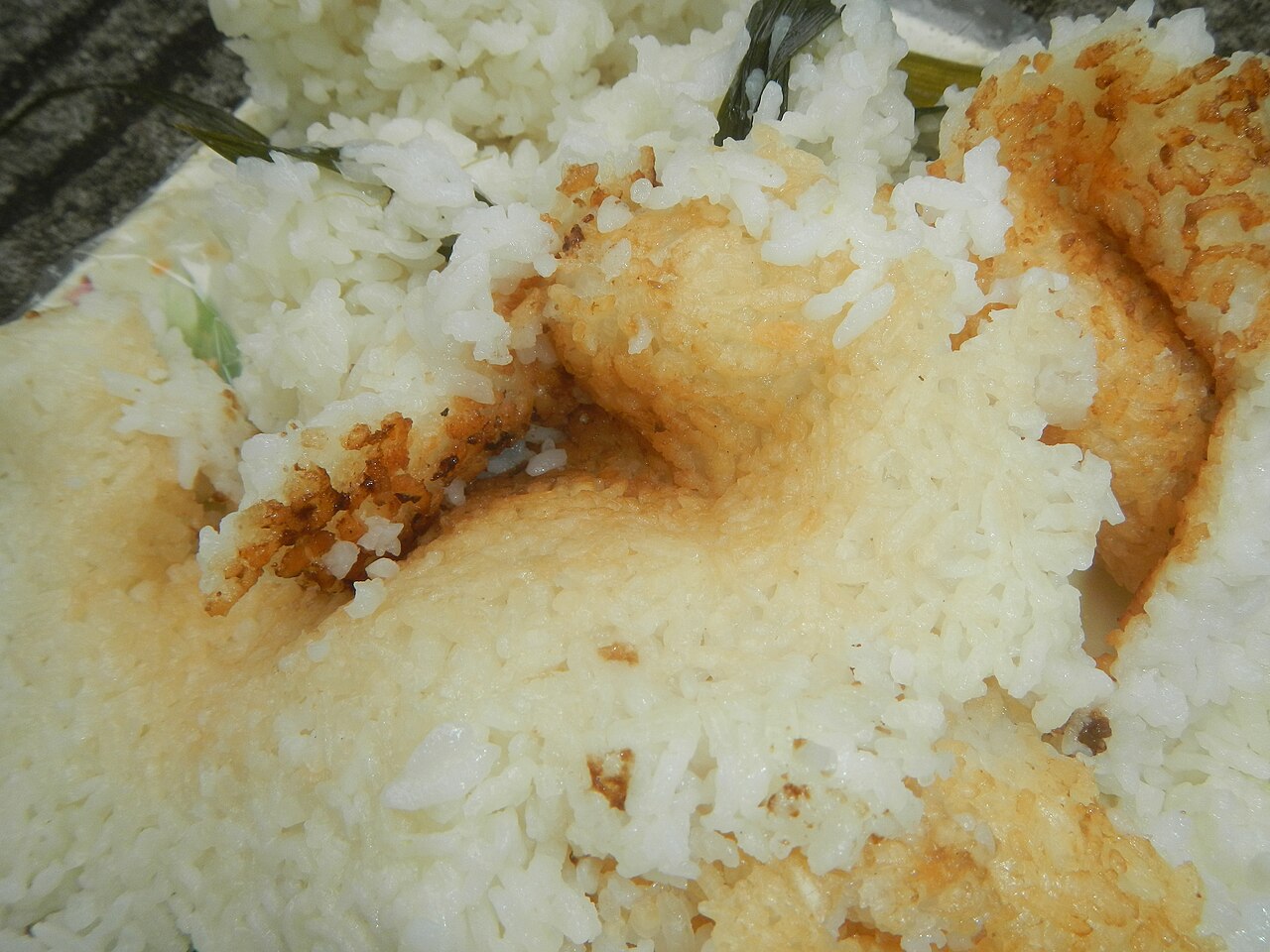
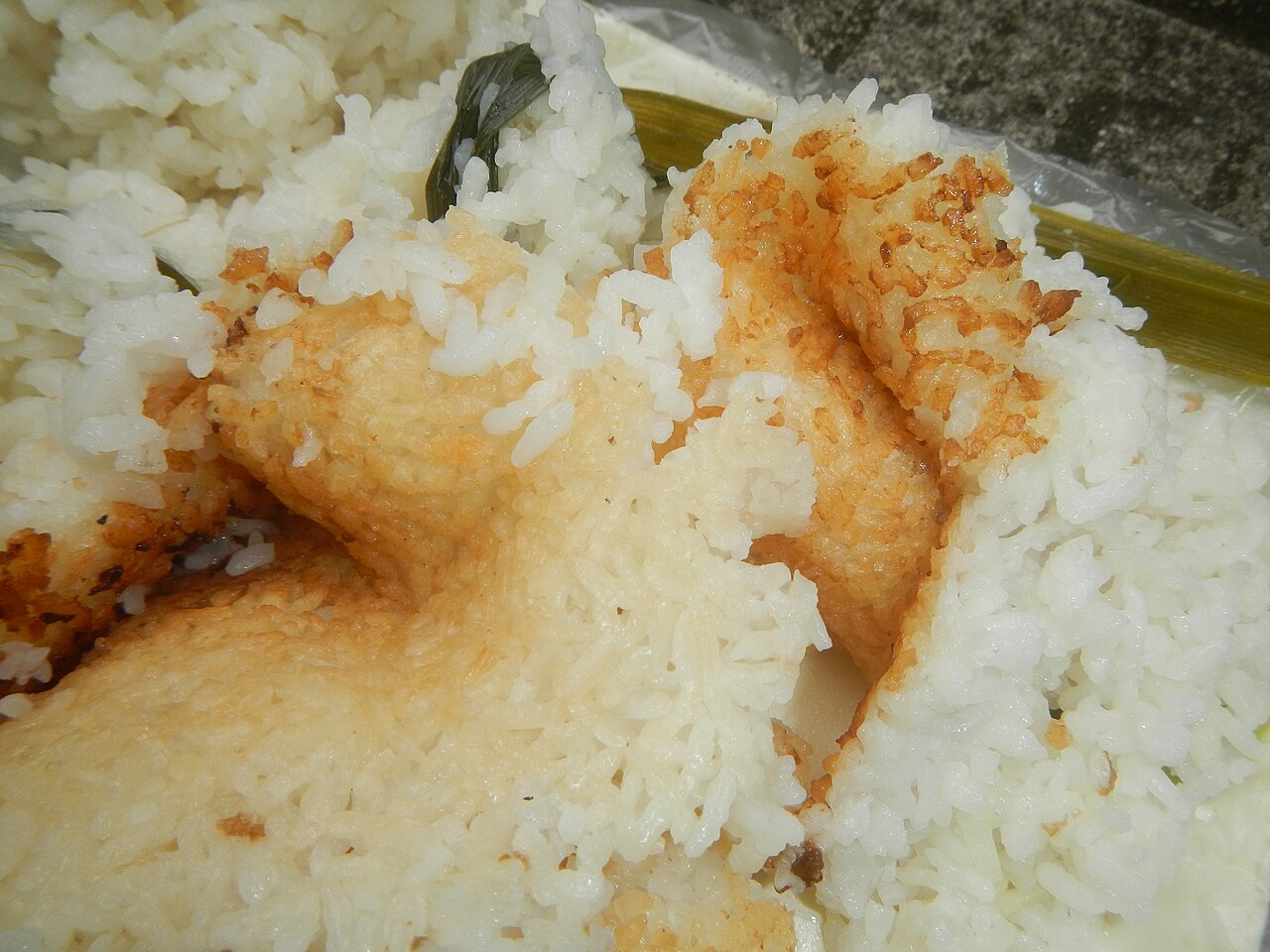
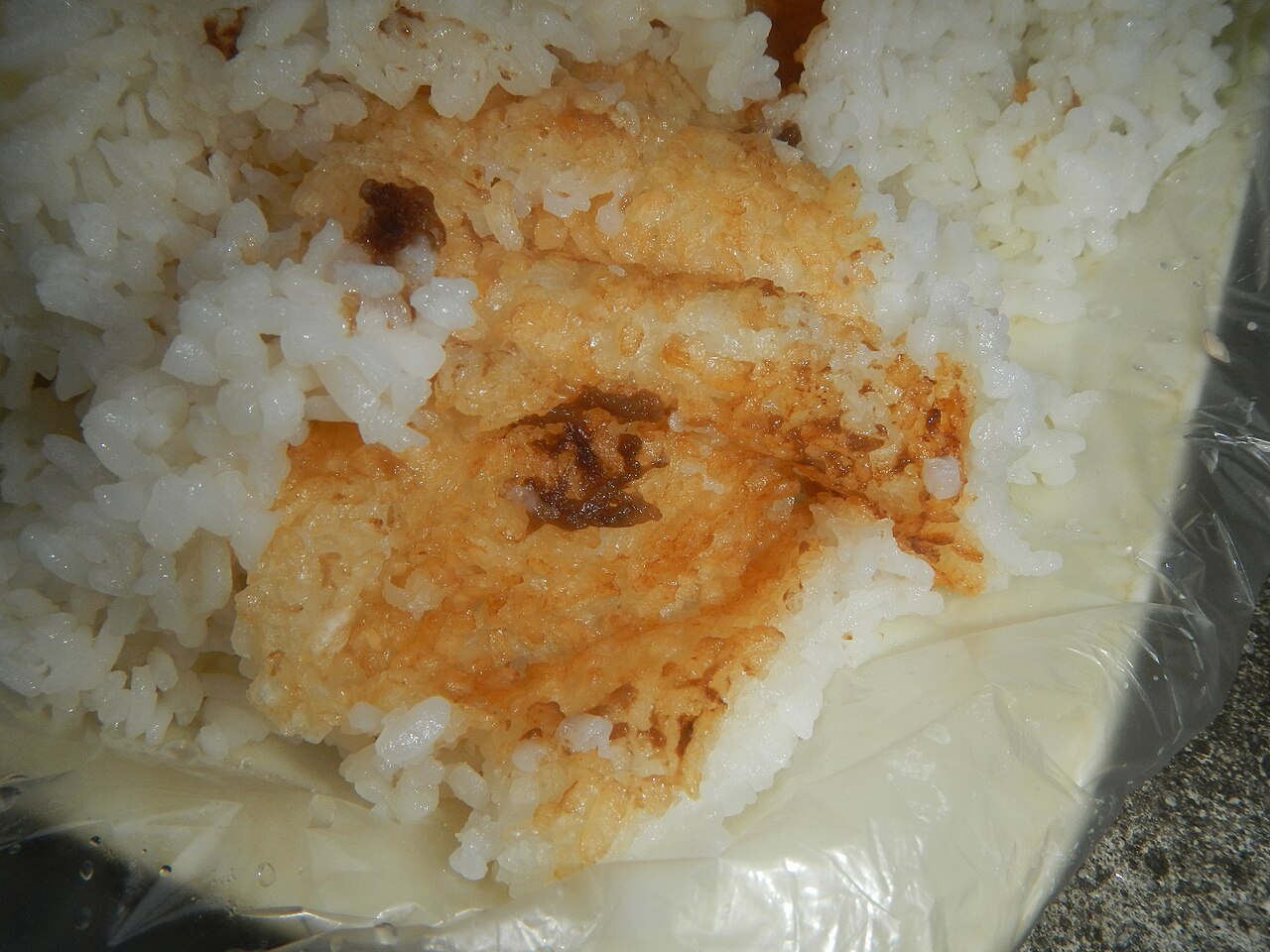
Scorched rice is the name for the thin, slightly browned crust that develops at the bottom of a pot while rice cooks. It goes by many names around the world and is often treated as a prized dish rather than a cooking accident.
In Cape Verde, this crunchy layer is called kokorota. It was traditionally prepared outdoors in a three-legged metal pot over a wood fire. Today, butane stoves and modern pots are more common, but the old three-legged pots are still used in rural areas and for large gatherings like parties and festivals.
In China, scorched rice is known as guōbā, meaning "pan adherents," or mi guoba. It forms at the bottom of a wok or cooking vessel during boiling. Guōbā has a firm, crunchy texture and a light toasted flavor. It is eaten as a snack, often made from millet in commercial varieties, and used as an ingredient in dishes with thick sauces, soups, and stews, especially in Sichuan cuisine. Because regular cooking methods produce only a small amount, guōbā has been commercially manufactured since the 1980s. In Cantonese regions, it is called faan6 ziu1 (rice scorch) and is a key part of claypot rice.
In Ghana, scorched rice is called kanzo or ɛmo ase in Twi. It originally happens by accident when rice burns during cooking, and some people throw it away. However, kanzo has been rebranded as a staple and is now sold or intentionally made.
In Madagascar, scorched rice is called apango. It is boiled with water to make a drink called ranon'apango or ranovola, which is the national drink served with all traditional food. Once softened, the scorched rice can also be eaten on its own, and in some regions it is preferred over regular rice.
In Indonesia, especially Central Java, scorched rice is called intip, a specialty of Wonogiri Regency. It is made into a cracker by loosening the hardened, semi-burnt rice from the bottom of the cooking vessel with water, then sun-drying it until all liquid is gone, and finally deep-frying it. A similar cracker, rengginang, exists but is not made from scorched rice; it is created separately from steamed sticky rice that is boiled, seasoned, shaped, dried, and then fried.
In Iran, scorched rice is called tahdig, meaning "bottom of the pot." It is a necessary part of every rice dish and is traditionally served to guests. Instead of crisping only the rice, cooks often put a small amount of oil or lamb fat in the po
- also_known_as
- tahdig, guōbā, okoge, nurungji, intip, socarrat
- common_ingredient
- rice
- texture
- crisp, crunchy
- flavor
- slightly toasted, nutty
- cooking_method
- forms at bottom of pot during rice cooking
Lore & Background
Scorched rice is produced when rice is cooked in a pot over heat, leaving a browned, crunchy layer at the bottom. In Cape Verde, it is called kokorota and traditionally cooked in three-legged metal pots over firewood. In China, guōbā is used as a snack or ingredient in thick sauces and soups, and has been commercially manufactured since the 1980s. In Iran, tahdig is a necessary part of rice cooking, often made with yogurt, bread, or vegetables layered at the bottom of the pot.
Reader's Guide
Scorched rice holds cultural significance as both a byproduct and a deliberate specialty. In Madagascar, the drink ranon'apango made from scorched rice is the national drink. In Korea, nurungji is traditionally known for medicinal attributes and is mentioned in the 17th-century medical book Dongui Bogam. In Japan, okoge is an important part of the kaiseki meal served at tea ceremonies. The variety of names and uses—from Indonesian intip crackers to Spanish socarrat in paella—demonstrates how a simple cooking phenomenon has been embraced and elevated across continents.
Did You Know?
- In Madagascar, scorched rice is boiled with water to make ranon'apango, the national drink.
- In Iran, tahdig is traditionally served to guests and can include ingredients like yogurt, saffron, or potato.
- In Korea, nurungji is mentioned in the 17th-century medical book Dongui Bogam as a remedy for stomach issues.
- In Japan, okoge is also slang for a woman who has gay friends, roughly equivalent to 'fag hag'.
A Universal Phenomenon, Many Names
The thin, browned crust that forms at the bottom of a rice pot is one of the most universally recognized cooking byproducts in the world, yet each culture has given it its own identity. In Cape Verde, it is called kokorota; in Ghana, kanzo or ɛmo ase; in Madagascar, apango; in Central Java, intip; in Iran, tahdig; in Iraq, hikakeh; in Japan, okoge; in Korea, nurungji; and in China, guoba or faan ziu in Cantonese-speaking regions. This proliferation of names reflects how deeply embedded the concept is in daily life across continents. What might seem like a minor detail of stovetop cooking has earned dedicated vocabulary in at least nine distinct culinary traditions, signaling that the crispy bottom layer is far from an afterthought. Each name carries its own cultural weight: tahdig is a guest honor in Iranian homes, while okoge closes a formal Japanese tea ceremony. The shared phenomenon, cooked in different vessels over different heat sources, unites these traditions in a quiet, crunchy way.
From Accident to Intentional Craft
In several traditions, scorched rice began as an unwanted consequence of imperfect heat control. In Ghana, kanzo is described as something that happens by mistake or by chance when rice burns during cooking, and some people still choose to discard it. In Japan, okoge was a natural result of cooking over wood or charcoal in a kamado, where regulating flame temperature proved difficult. Yet over time, these accidental byproducts were rebranded and elevated. In Ghana, kanzo has been repositioned as a staple food that is now deliberately sold or prepared. In Iran, the tahdig method has become so refined that cooks pour oil or lamb fat into the pot first, then layer ingredients such as saffron yogurt, potato, pumpkin, tomato, eggplant, or sour cherry at the bottom before adding rice, ensuring the base crisps into a caramelized specialty. In Iraq, the hikakeh is a deliberate, prominent feature of the multi-step rice-cooking process. What was once a flaw in technique has become a point of pride and a defining element of a meal.
A Crust with Many Roles
Scorched rice is remarkably versatile in how it reaches the plate. In China, guoba serves as a standalone snack, an ingredient in thick-sauced dishes where its bland base absorbs surrounding flavors, and a component of soups and stews, particularly in Sichuan cuisine. In Korea, nurungji can be eaten crisp as a snack, dissolved into a warm rice tea, or reboiled into nureun bap, a porridge-like dish. In Madagascar, apango is boiled in water to produce ranon'apango, a golden-hued national drink that accompanies every traditional meal, while the softened crust itself can substitute for regular rice. In Indonesia, the hardened intip from Wonogiri is sun-dried and deep-fried into a cracker, distinct from rengginang, which is made from separately prepared sticky rice. In Japan, okoge is moistened with water, soup, or tea and paired with pickles as the final course of a kaiseki meal. In Iraq, hikakeh is broken into pieces and distributed alongside fluffy rice so every diner receives a share. The same basic crust becomes a snack, a sauce vehicle, a beverage, a cracker, a ceremony course, and a communal treat.
Adapting to the Modern Kitchen
The shift from open flames to controlled heat sources has fundamentally altered how scorched rice is produced. In Cape Verde, traditional cooking in three-legged metal pots over burning firewood has given way to butane stoves and store-bought cookware, though the old pots persist in rural settings and large gatherings. In Japan, the widespread adoption of electric rice cookers in the twentieth century largely eliminated natural okoge formation, prompting manufacturers to develop a dedicated okoge setting and encouraging home cooks to scorch rice in a frying pan as an alternative. In China, the high demand for guoba, coupled with the fact that standard rice cooking yields only a small quantity, drove commercial manufacturing to begin in the 1980s, with many packaged snack versions now made from millet rather than white rice. In Iran, the tahdig technique has even been extended to spaghetti, creating a hardened base beneath pasta. These adaptations show that while the tools of cooking have modernized, the appetite for that satisfying, caramelized bottom layer has only grown.
Gallery
Frequently Asked Questions
What exactly is Scorched rice?
Scorched rice is the thin, golden-brown layer that naturally forms on the base of a cooking vessel while rice is being prepared. Far from being a kitchen blunder, it is widely celebrated across cultures as a delicious bonus that many cooks actively try to produce.
How does Scorched rice actually form?
It develops on its own once the cooking liquid has mostly evaporated and the starchy grains at the bottom toast against the hot surface of the pot. No extra step is needed beyond standard rice preparation, though the heat level and the material of the vessel can affect how crisp the final crust turns out.
What does Scorched rice taste and feel like?
The crust delivers a distinctly crisp, crunchy bite paired with a lightly toasted, nutty flavor that sets it apart from the softer grains above. Fans often describe it as the single best part of the pot and save it for last.
What other names does Scorched rice go by around the world?
Depending on the region you'll encounter it as tahdig, guōbā, okoge, nurungji, intip, or socarrat, among others. In Cape Verde it is called kokorota and has traditionally been made in a three-legged metal pot set over an open wood fire.
Why is Scorched rice treated as a prized dish rather than a cooking accident?
Across many cultures the crunchy bottom layer is a sought-after treat that family and friends compete over at the table. Its presence is seen as a mark of a well-cooked pot, and in places like rural Cape Verde, gathering to share it at festivals and large parties is a long-standing tradition.
More in Ecuadorian cuisine 25-40
Spotted an error? Know more?
This is a living reference — every entry is fact-audited, and reader corrections feed straight into our audit queue. Suggest an edit · See this site's audit record