
Ilex guayusa
Caffeinated Amazonian holly tree used for stimulant tea.

Wikipedia / Wikimedia Commons
Ilex guayusa is a species of tree in the holly family, Aquifoliaceae, native to the Amazon rainforest. It is one of four known caffeinated holly trees, and its leaves are harvested fresh and brewed like a tea for their stimulative effects. Known as guayusa in Spanish, waisa in Kichwa, and wayus or wais in Shuar, the tree has been used for centuries by indigenous peoples of the Amazon basin.
- field
- Botany
- native_range
- Upper Amazonian regions of Ecuador, Peru, and southern Colombia
- elevation_range
- 200–2,000 m (660–6,560 ft)
- height
- 6–30 m (20–98 ft)
- known_for
- Caffeinated leaves used to make a stimulant infusion
- caffeine_content
- 1.73–3.48%
Lore & Background
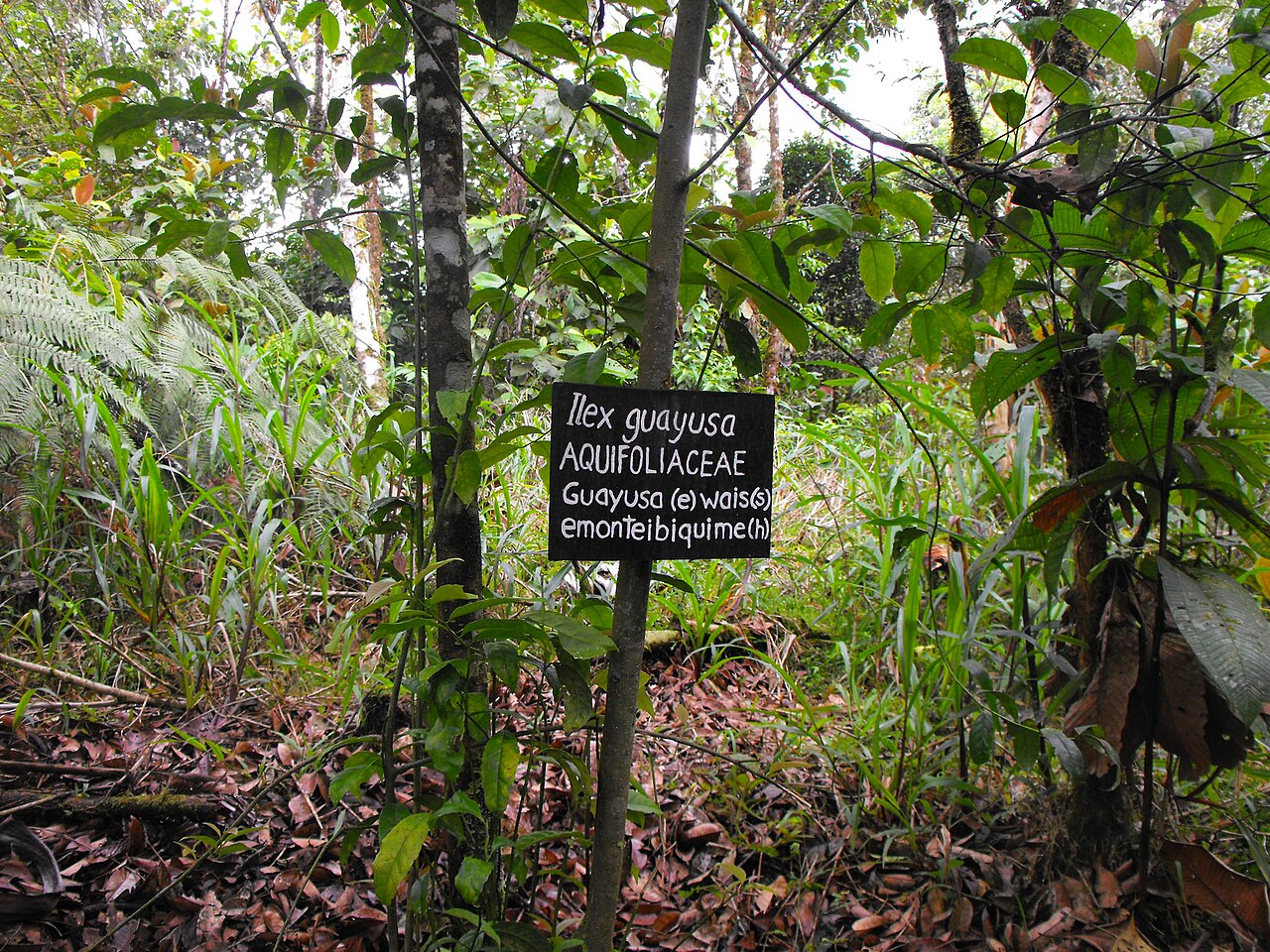
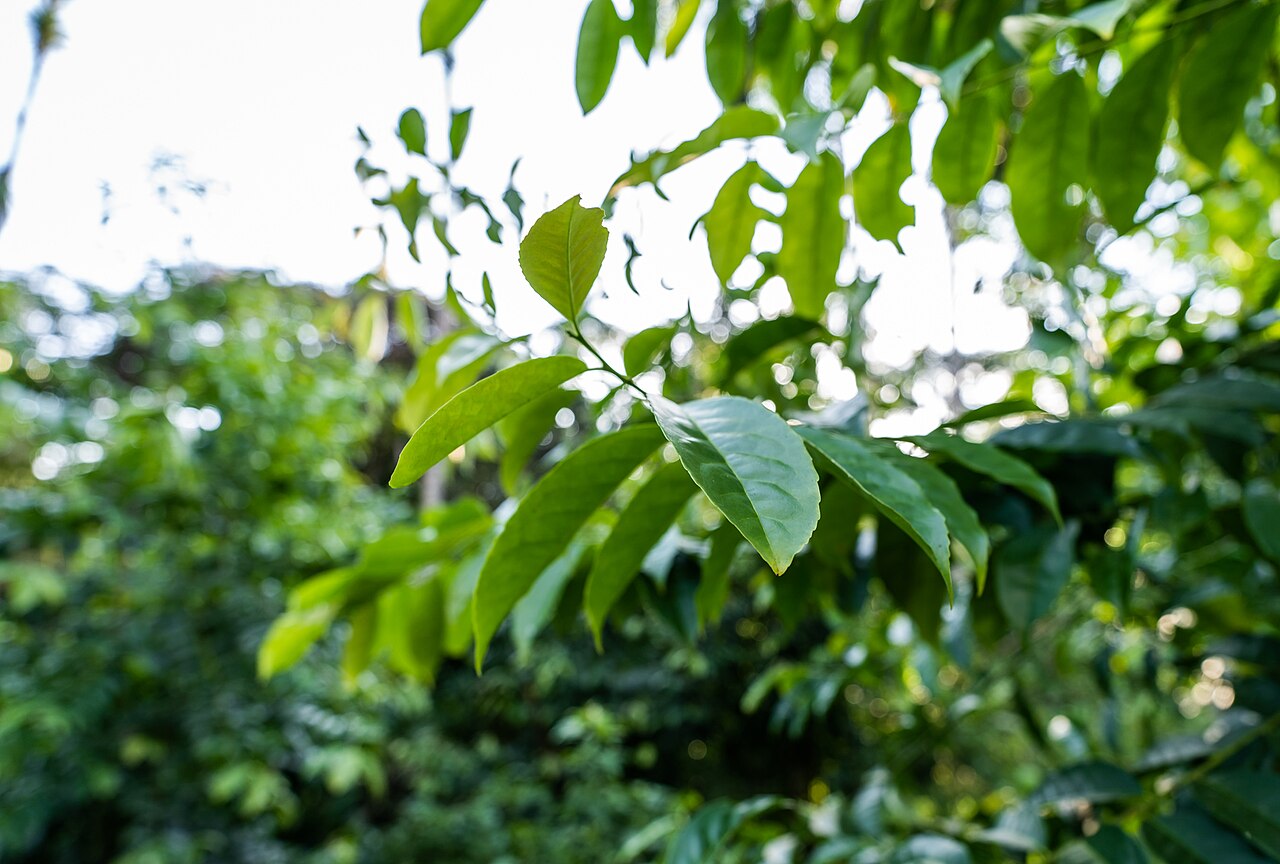
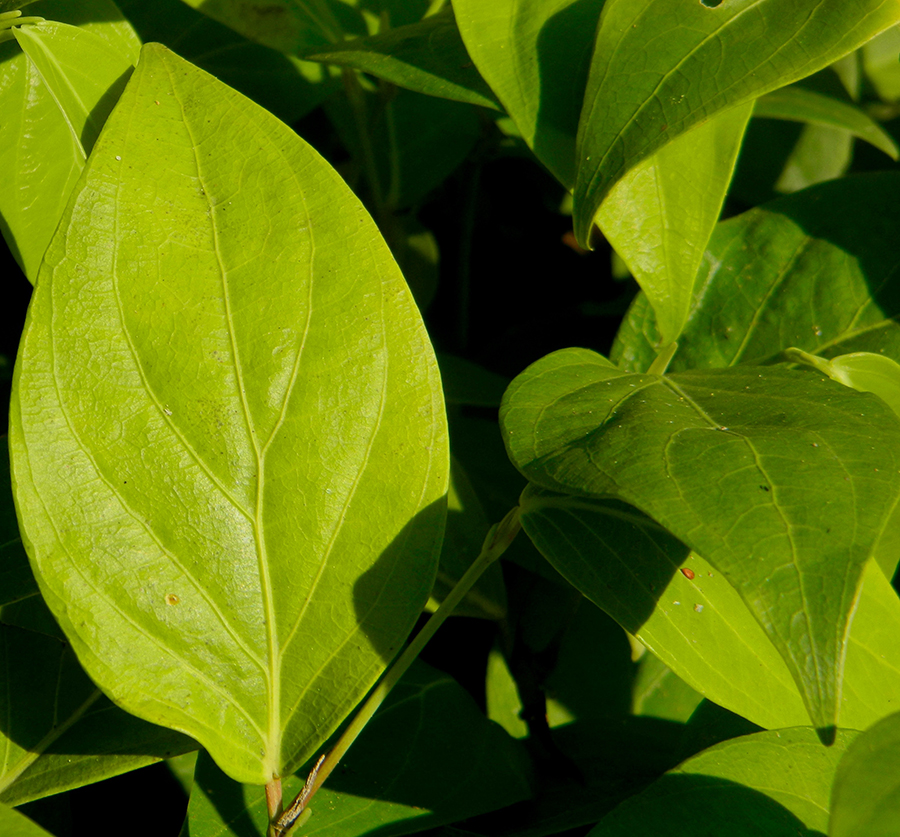
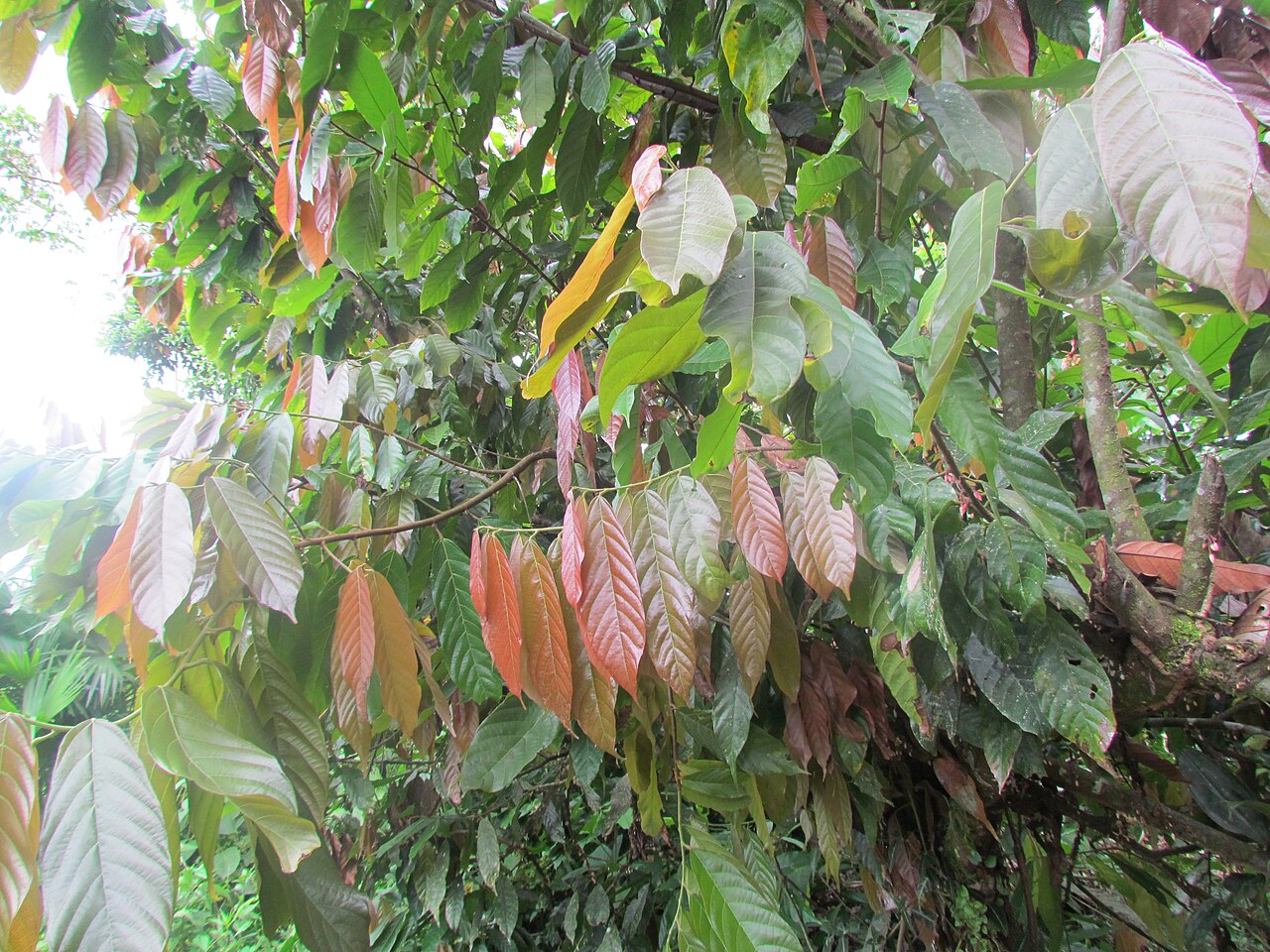
Ilex guayusa is an evergreen dioecious tree that grows 6–30 m tall, with ovate to lanceolate leaves and small white flowers. Its fruit is spherical and red. The tree is native to the upper Amazonian regions of Ecuador, Peru, and southern Colombia, between 200–2,000 m elevation, though it was also collected in Bolivia in 1939. It is found in evergreen or deciduous premontane forests, especially those dominated by Dictyocaryum palms, and is known almost exclusively as a cultivated plant, particularly in the Ecuadorian provinces of Napo and Pastaza.
The earliest evidence of human use is a 1,500-year-old bundle of guayusa leaves found in a medicine man's tomb in the Bolivian Andes. Father Juan Lorenzo Lucero reported in 1683 the daily consumption of guayusa infusions by the Jivaroan peoples. In the 18th century, missionaries in Colombia, Ecuador, and Peru wrote about its uses, and some consumed it for digestive and stimulant properties. The Jesuits traded it actively. A grove found in 1857 by Richard Spruce near Baños, Ecuador, was supposedly cultivated since precolumbian times.
Guayusa leaves are used to make an infusion, especially by Amazonian peoples in Ecuador, Peru, and Colombia. The Kichwa cultivate it in horticultural plots called chakras and drink it daily, as well as at parties and festivals. It is also used as a medicine, often combined with ginger, lime juice, or sugar cane liquor. Jivaroan peoples drink large amounts during pre-dawn ceremonies that involve vomiting to avoid absorbing too much caffeine. The Awajún of northern Peru use it similarly, and the Quechua use it for foretelling dreams for hunting.
Reader's Guide
Ilex guayusa holds significance as one of only four known caffeinated holly species, alongside yerba mate, yaupon holly, and kuding. Its leaves, containing caffeine, theobromine, L-theanine, and other compounds, have been used for at least 1,500 years by indigenous peoples of the Amazon basin. The tree is unusual in that it is rarely found wild and is known almost exclusively as a cultivated plant, especially in Ecuador, Peru, and Colombia. Its reliance on asexual reproduction—via basal shoots, sprouts, and suckers—reflects its low fertility in the wild. The plant's cultural importance is deep: the Kichwa use it as a daily social drink that promotes conviviality, while Jivaroan and Awajún peoples incorporate it into purifying ceremonies. In recent years, guayusa has entered international markets as a caffeinated alternative to coffee and tea, promoted for its antioxidant and polyphenol content. Its legacy is tied to both traditional Amazonian lifeways and modern global interest in natural stimulants.
Did You Know?
- Ilex guayusa is one of only four known caffeinated holly trees.
- The earliest evidence of human use is a 1,500-year-old bundle of leaves found in a medicine man's tomb in the Bolivian Andes.
- The tree relies mostly on asexual reproduction because it yields little fertile material.
- Guayusa leaves contain caffeine (1.73–3.48%), theobromine, L-theanine, and chlorogenic acid.
Botanical Identity & Physical Form
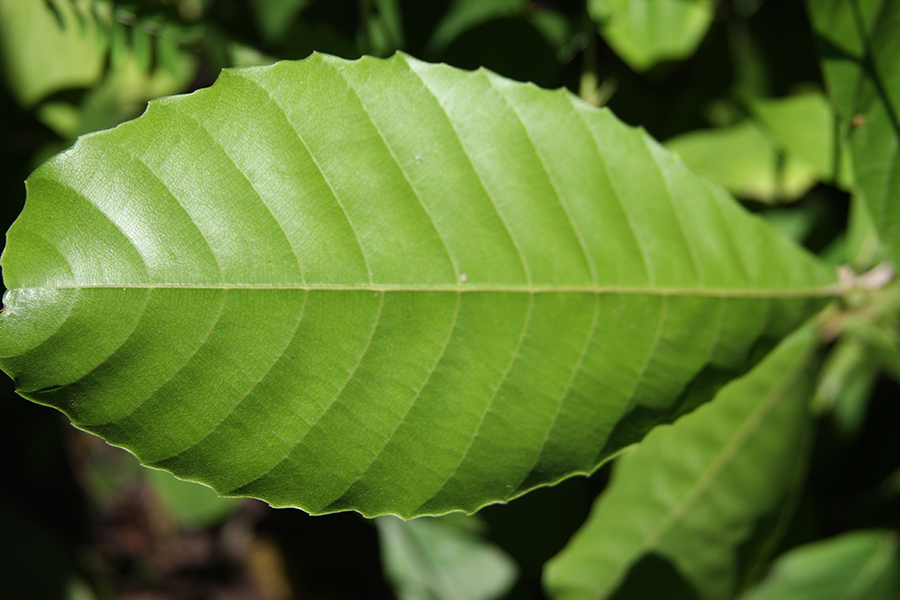
Ilex guayusa belongs to the holly family, Aquifoliaceae, and stands as one of only four known caffeinated holly species in the world. Native to the Amazon rainforest, this evergreen dioecious tree reaches heights between six and thirty meters, making it a substantial presence in its native canopy. Its foliage takes several shapes—ovate, elliptic, oblong, or lanceolate—measuring roughly seven to twenty-two centimeters in length and two and a half to seven centimeters in width, with edges that are either serrated or toothed. Small white flowers cluster in thyrses, and the resulting fruit is a tiny red sphere, just six to seven millimeters across. The species carries different names depending on the language: guayusa in Spanish and other western tongues, waisa among the Kichwa, and wayus or wais in Shuar. Though it thrives in the upper Amazonian regions of Ecuador, Peru, and southern Colombia at elevations from two hundred to two thousand meters, a single collection record places it in Bolivia as far back as 1939.
Ecology, Reproduction & Cultivation
In the wild, Ilex guayusa favors sandy-loamy soils with a pH between 4.34 and 5.01, characterized by low cation-exchange capacity and elevated metal content. It thrives in lowland and premontane neotropical jungle, particularly in evergreen or deciduous forests where Dictyocaryum palms dominate the understory. Despite its capacity for floral polygamy, the species produces very little fertile seed material and instead depends heavily on asexual propagation through basal shoots, sprouts, and suckers. Its early growth follows a classic understory pattern: it begins as a low shrub with spreading branches when exposed to increased light, and only over time matures into a full tree. Botanical collections of wild guayusa are exceedingly rare; the plant is known almost exclusively as a cultivated species, especially in the Ecuadorian provinces of Napo and Pastaza, where indigenous communities tend it in managed plots.
Indigenous Rituals & Social Traditions
The human relationship with guayusa stretches back at least fifteen centuries. A bundle of dried leaves was discovered in the tomb of a medicine man in the Bolivian Andes, a site well beyond the plant's natural range, suggesting long-distance trade or cultural transmission. By 1683, Father Juan Lorenzo Lucero documented the Jivaroan peoples' daily habit of brewing guayusa infusions, and throughout the eighteenth century, missionaries across Colombia, Ecuador, and Peru recorded its digestive and stimulant properties. The Jesuits even traded the plant actively. In 1857, botanist Richard Spruce encountered a grove near Baños, Ecuador, believed to have been cultivated since precolumbian times. Today, the Kichwa grow guayusa in chakras and drink it at gatherings, festivals, and rituals, serving the infusion in gourds alongside storytelling, dream interpretation, and net-weaving. The Jivaroan and Awajún peoples consume large quantities during pre-dawn ceremonies, deliberately inducing vomiting to purge excess caffeine. The Quechua drink it to receive prophetic dreams that guide hunting expeditions.
Chemistry & the Modern Global Market
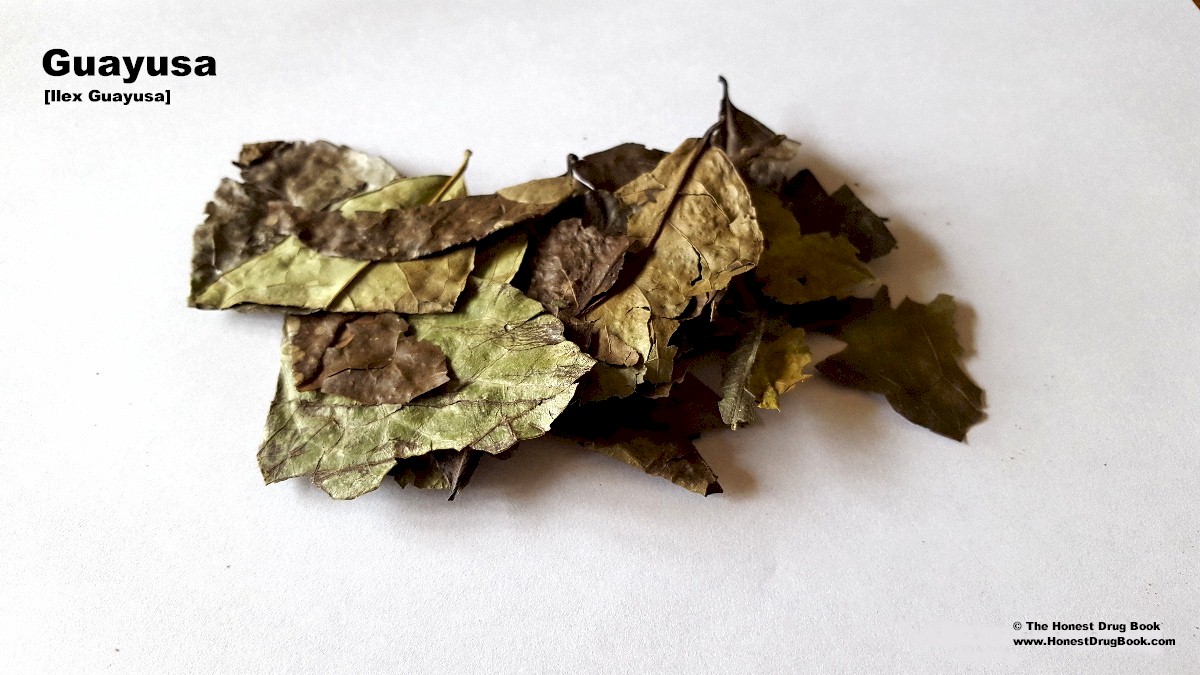
Guayusa leaves carry a caffeine concentration between 1.73 and 3.48 percent, alongside theobromine, paraxanthine, and theophylline—other dimethylxanthine compounds. The chemical profile extends well beyond stimulants: L-theanine, gallic acid, chlorogenic acid, ascorbic acid, riboflavin, choline, pyridoxine, triterpenes, and various sugars all contribute to the leaf's composition. After harvest, the leaves are dried to develop their flavor before being brewed into an infusion. In Ecuador, Peru, and Colombia, guayusa also enters the preparation of artisanal alcoholic beverages, and it is commonly combined with ginger, lime juice, or sugar cane liquor as a medicinal remedy. Beyond the Amazon basin, the drink has found audiences among mestizo and white Ecuadorian populations and has recently entered international markets. Western media has promoted it as a caffeinated alternative to coffee and conventional tea, highlighting its high antioxidant and polyphenol content as key selling points for health-conscious consumers.
Gallery
Frequently Asked Questions
What is Ilex guayusa and where is it from?
It is a caffeinated holly tree native to the upper Amazonian regions of Ecuador, Peru, and southern Colombia, growing at elevations between 200 and 2,000 meters. As one of only four known holly species that naturally produce caffeine, it stands out in the Aquifoliaceae family.
How do people actually drink guayusa?
The leaves are harvested fresh and steeped in hot water much like a traditional tea, producing a smooth stimulant infusion. This fresh-brew method is what distinguishes it from dried-leaf teas or roasted coffee preparations.
How much caffeine is in guayusa compared to other drinks?
The leaves carry a caffeine content of roughly 1.73% to 3.48% by weight, delivering a clear stimulative effect in the brewed infusion. That range puts it in the same general neighborhood as other caffeinated plant beverages.
What do indigenous communities call guayusa?
In addition to the Spanish name guayusa, the plant is known as waisa in Kichwa and as wayus or wais in Shuar. These varied names reflect its long history of use by indigenous peoples throughout the Amazon basin.
How big does a guayusa tree get in the wild?
Individual trees can grow anywhere from about 6 to 30 meters tall, making them a substantial part of the rainforest understory and canopy. They are found across a wide elevation band in the upper Amazon, from lowland riverbanks up to roughly 2,000 meters.
More in Ecuadorian cuisine 25-40
Spotted an error? Know more?
This is a living reference — every entry is fact-audited, and reader corrections feed straight into our audit queue. Suggest an edit · See this site's audit record