
Pampa mesa
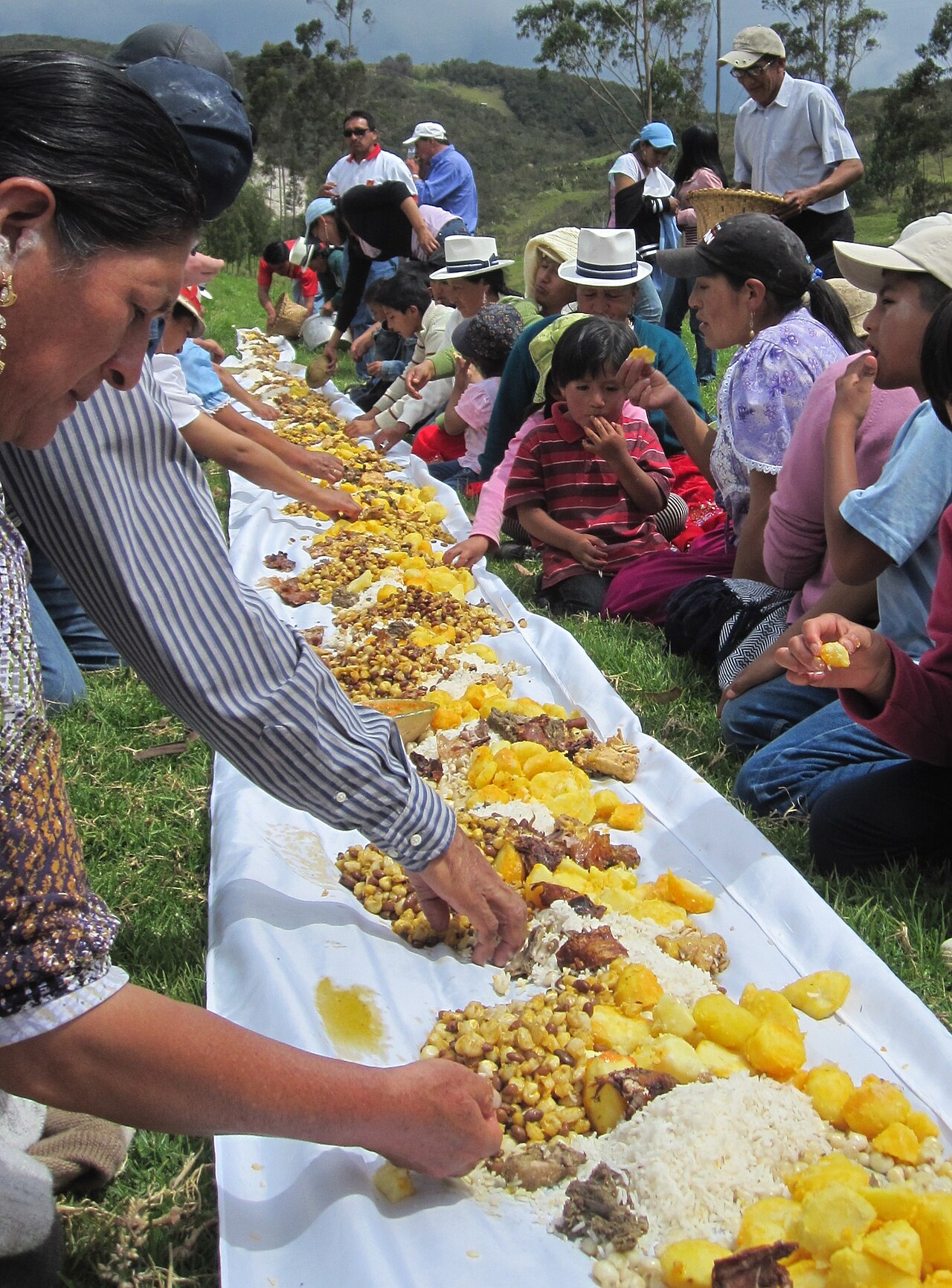
A communal meal on the ground symbolizing solidarity and earth connection.

Wikipedia / Wikimedia Commons
A pampa mesa (also spelled pamba mesa) is a communal meal tradition in indigenous communities of the Ecuadorian highlands, where food is laid directly on a cloth spread on the ground. The practice is seen as an act of social solidarity and carries mythological connotations, particularly a connection with Pachamama, the earth mother of Inca mythology.
- name
- Pampa mesa
- region
- Ecuadorian highlands
- language_origin
- Kichwa and Spanish
- associated_deity
- Pachamama (earth mother)
- typical_foods
- mote, potatoes, quinoa, oca, carrots, fava beans, cuy
- similar_tradition
- apthapi (Peru and Bolivia)
Lore & Background
The origins of the pampa mesa tradition are unknown. It is often used at festivals, family celebrations, or after mingas (gatherings for communal work). For a pampa mesa, a long, typically white cloth is spread on the ground. Traditionally, participants bring the food they are able to share, and each spreads their food along the cloth for all to eat. Participants sit along the cloth and eat with their hands, without utensils or dishes. Before eating, a community leader may give thanks, and a portion of the food may be buried as an offering to the earth mother.
Reader's Guide
The pampa mesa is significant as a living expression of social solidarity and indigenous worldview in the Ecuadorian highlands. By having all contribute as they are able and partake as they wish, the meal reinforces communal bonds and egalitarian values. The practice also carries deep spiritual meaning: sitting on the earth and eating from the cloth is believed to be a form of connection with Pachamama, the earth mother goddess from Inca mythology who continues to be revered in Ecuador. Additionally, a pampa mesa may serve as an act of thanksgiving for the harvest. The tradition persists alongside similar practices in neighboring Andean regions, such as the apthapi in Peru and Bolivia, highlighting a shared cultural heritage. Its endurance, despite unknown origins, demonstrates the resilience of indigenous customs in maintaining community identity and spiritual ties to the land.
Did You Know?
- The name combines Kichwa 'pampa' (ground or plain) and Spanish 'mesa' (table).
- Food is eaten with hands, without utensils or dishes.
- A portion of food may be buried as an offering to the earth mother before eating.
- A similar tradition in Peru and Bolivia is called apthapi.
A Name Rooted in the Land
The phrase pampa mesa is a linguistic bridge between two worlds. Its first half, pampa, comes from Kichwa, the indigenous language of the Andes, and carries the meaning of ground or plain. The second half, mesa, is borrowed from Spanish and simply means table. Together, the name paints a vivid picture: a table laid upon the earth itself. This practice belongs to indigenous communities in the Ecuadorian highlands, where it functions as a communal meal in which food is arranged directly on a cloth spread across the ground. What remains genuinely mysterious is the tradition's origin. No definitive account exists for when or how the pampa mesa first emerged, leaving its roots buried much like the small portion of food that participants later press into the soil as an offering. What is clear is that the practice has endured long enough to become woven into the social and spiritual fabric of highland Ecuadorian life, appearing at festivals, family gatherings, and the celebrations that follow communal labor events known as mingas.
The Ritual Unfolding
The mechanics of a pampa mesa are deceptively simple yet deeply intentional. A long cloth, traditionally white, is stretched across the ground to serve as the shared surface. Each participant arrives carrying whatever food they are able to contribute, and one by one, they lay their offerings along the length of the cloth so that everything is visible and accessible to everyone. There are no plates, no forks, no individual portions. Once the spread is complete, people settle onto the ground beside the cloth and eat with their bare hands, drawing directly from the communal display. Before the first bite is taken, a community leader may offer words of gratitude for the food gathered. In a gesture that underscores the meal's spiritual weight, a small portion of the food is then buried in the earth as an offering to the earth mother. The entire sequence, from contribution to consumption to the final act of giving back to the soil, transforms a simple act of eating into a structured ritual of reciprocity.
Solidarity and the Sacred
At its core, the pampa mesa is an expression of social solidarity. Every person contributes according to their means, and every person eats according to their desire. There is no hierarchy of who brings the most or who sits at the head of the table, because there is no table in the conventional sense. Beyond this egalitarian principle, the practice carries deep mythological resonance. Many participants understand the act of sitting on the earth and eating from the ground as a tangible connection to Pachamama, the earth mother figure from Inca mythology who continues to command reverence throughout Ecuador. The pampa mesa can also be read as an act of thanksgiving for the harvest, a way of acknowledging that the food on the cloth did not appear by human effort alone. The buried offering and the leader's words of thanks reinforce this sense of gratitude toward forces larger than any single family or community.
What Lays on the Cloth
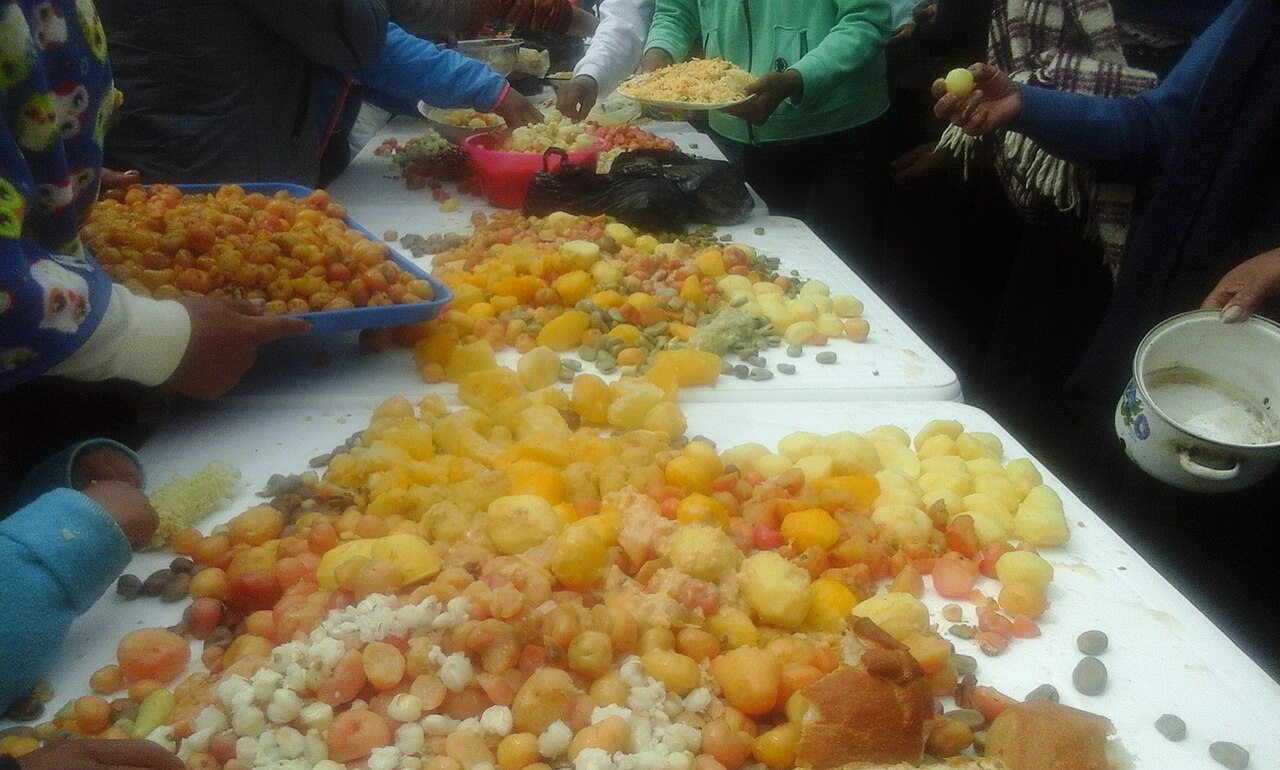
The food that finds its place along the pampa mesa cloth is rooted in the agricultural staples of the Andean highlands. Mote, potatoes, quinoa, oca, carrots, and fava beans form the backbone of most spreads, reflecting the crops that thrive in the region's soils. On more substantial occasions, cuy, the guinea pig, and other meats may join the array. The presentation is not purely utilitarian: flowers and fruits are sometimes arranged as decoration, lending the cloth a festive, almost altar-like quality. The spicy condiment ají is a frequent companion, adding heat to the milder staples, while the fermented maize drink chicha de jora sometimes accompanies the meal as a shared beverage. The pampa mesa is not an isolated custom confined to Ecuador. A closely related tradition, known as apthapi, is practiced in neighboring Peru and Bolivia, suggesting that the impulse to gather, share, and eat together on the ground is a broader Andean cultural thread rather than a single community's invention.
Gallery
Frequently Asked Questions
What exactly is a pampa mesa?
It is a communal eating tradition from the Ecuadorian highlands in which the entire food spread is arranged on a cloth laid flat on the ground instead of a table. The practice is rooted in Kichwa- and Spanish-speaking indigenous communities and is understood as a tangible expression of group solidarity.
Where does pampa mesa come from and who still practices it?
The tradition belongs to indigenous communities in the Ecuadorian highlands, with its name and customs passed down through Kichwa and Spanish. It remains a living, everyday practice in those highland villages rather than a purely historical or ceremonial relic.
What do you actually eat at a pampa mesa?
A typical spread centers on Andean staples such as mote, potatoes, quinoa, oca, carrots, fava beans, and cuy (guinea pig). The emphasis is on locally grown, earth-rooted ingredients rather than imported or heavily processed foods.
Why is Pachamama connected to pampa mesa?
Laying food directly on the ground is interpreted as an offering to Pachamama, the Inca earth-mother deity, reinforcing a mythological bond between the diners and the soil beneath them. The act of sharing from the ground itself therefore carries spiritual weight that goes well beyond simple nutrition.
Is pampa mesa the same thing as Peru's apthapi?
They are closely related Andean traditions—both are communal meals served on the ground—but pampa mesa is the Ecuadorian highland expression while apthapi is the term used in Peru and Bolivia. Fans of the tradition often note the shared spirit of solidarity even though local ingredients and customs differ from one country to the next.
More in Ecuadorian cuisine 25-40
Spotted an error? Know more?
This is a living reference — every entry is fact-audited, and reader corrections feed straight into our audit queue. Suggest an edit · See this site's audit record