
Llapingacho
Ecuadorian fried potato pancakes stuffed with cheese and served with peanut sauce.

Wikipedia / Wikimedia Commons
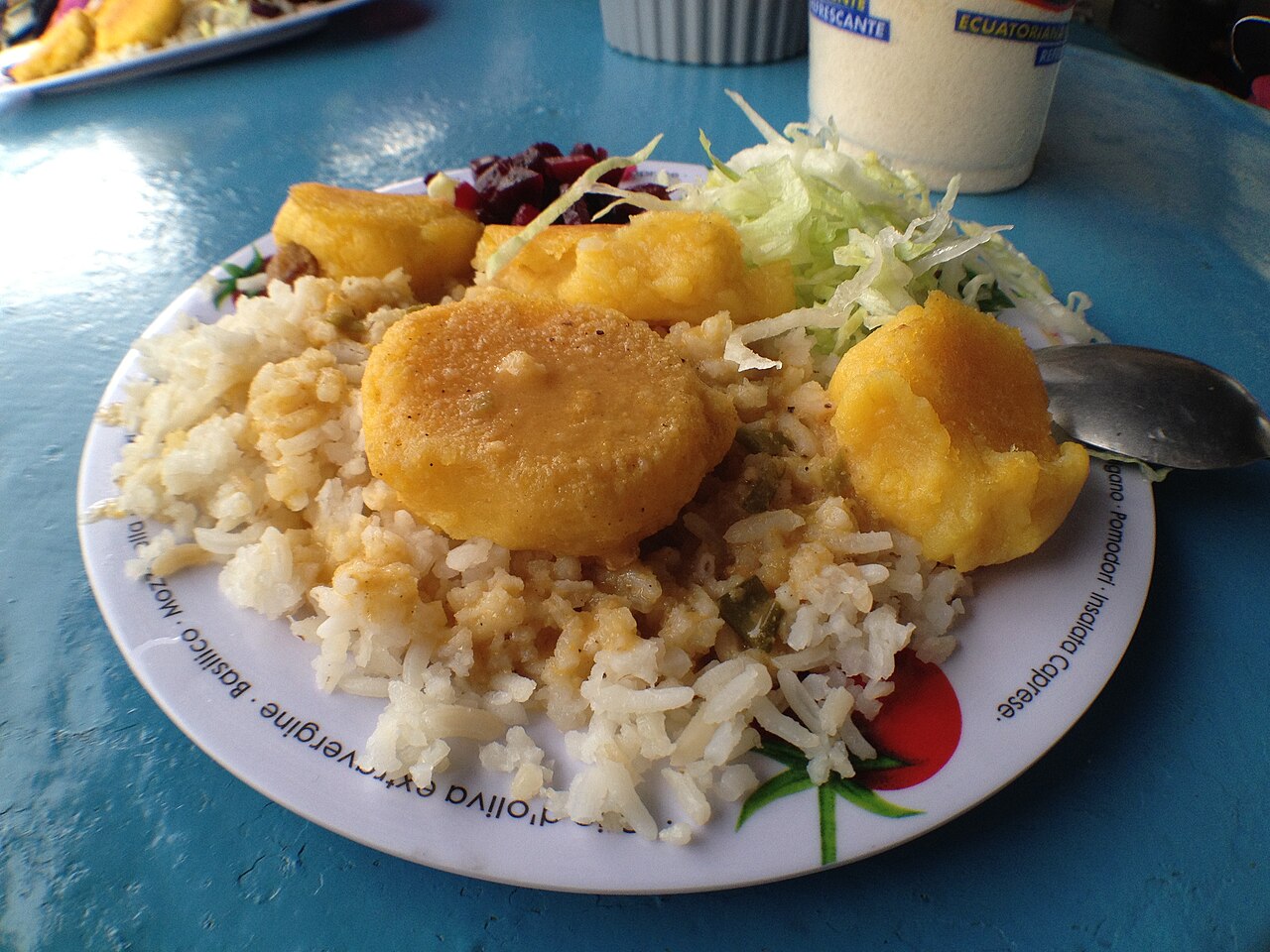
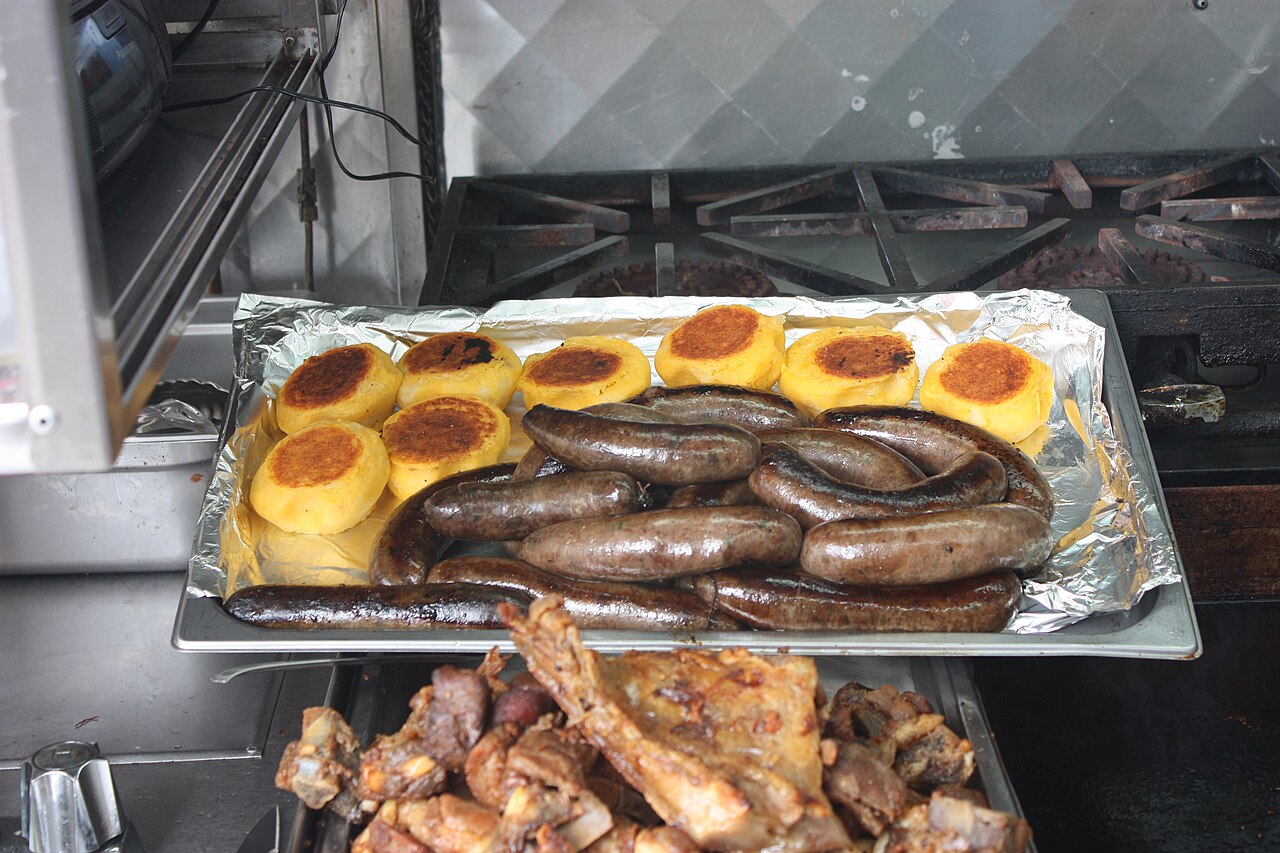
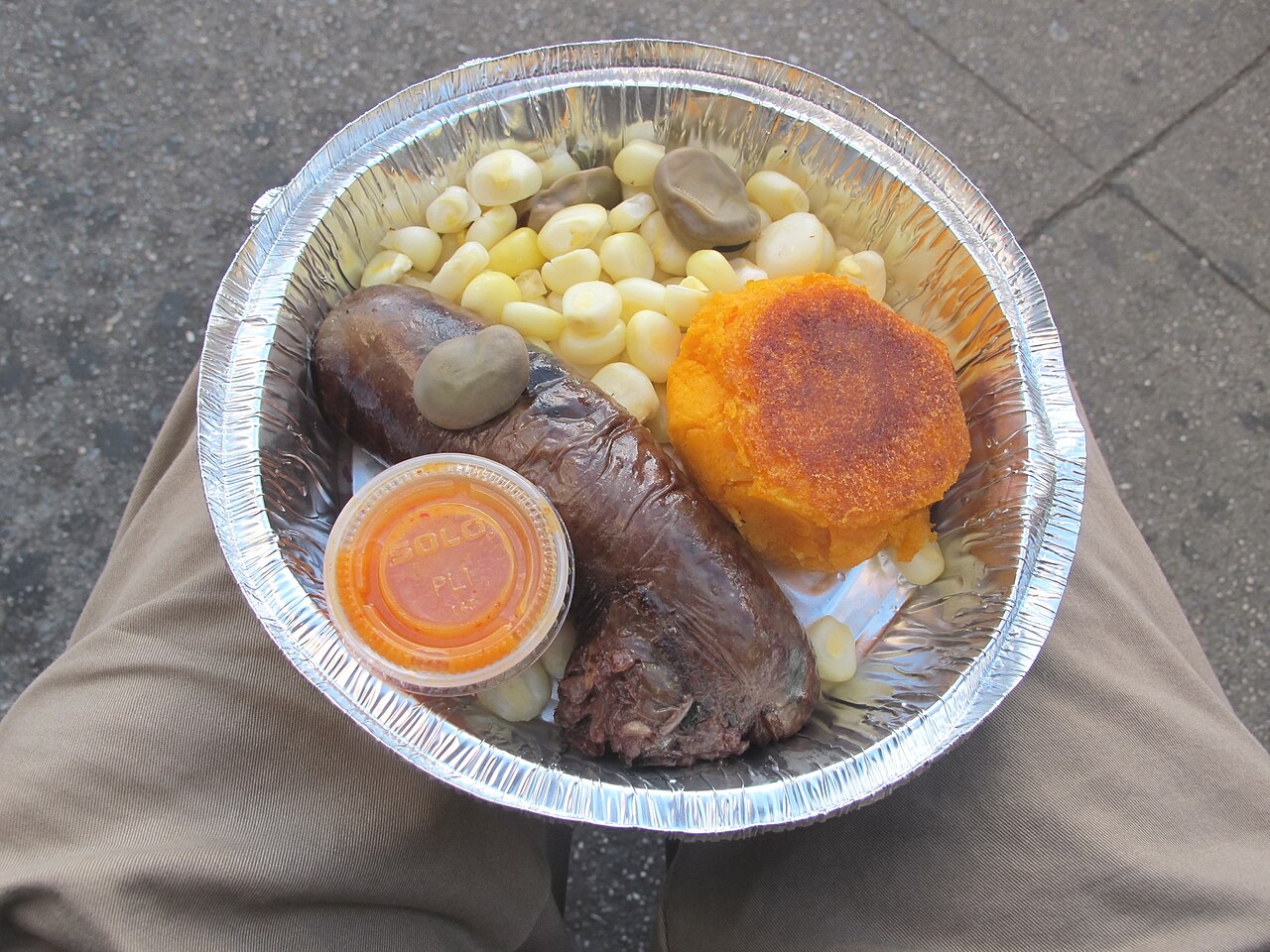
Llapingachos are thick, fried potato cakes from Ecuador. They are made by stuffing mashed potatoes with cheese, then cooking them on a hot griddle until the outside is crisp and brown. A common accompaniment is salsa de maní, a peanut sauce. While potatoes are typical, some versions in Ecuador use mashed yuca (also called cassava) instead—this root is not the same as the similarly named yucca plant, whose roots are generally inedible.
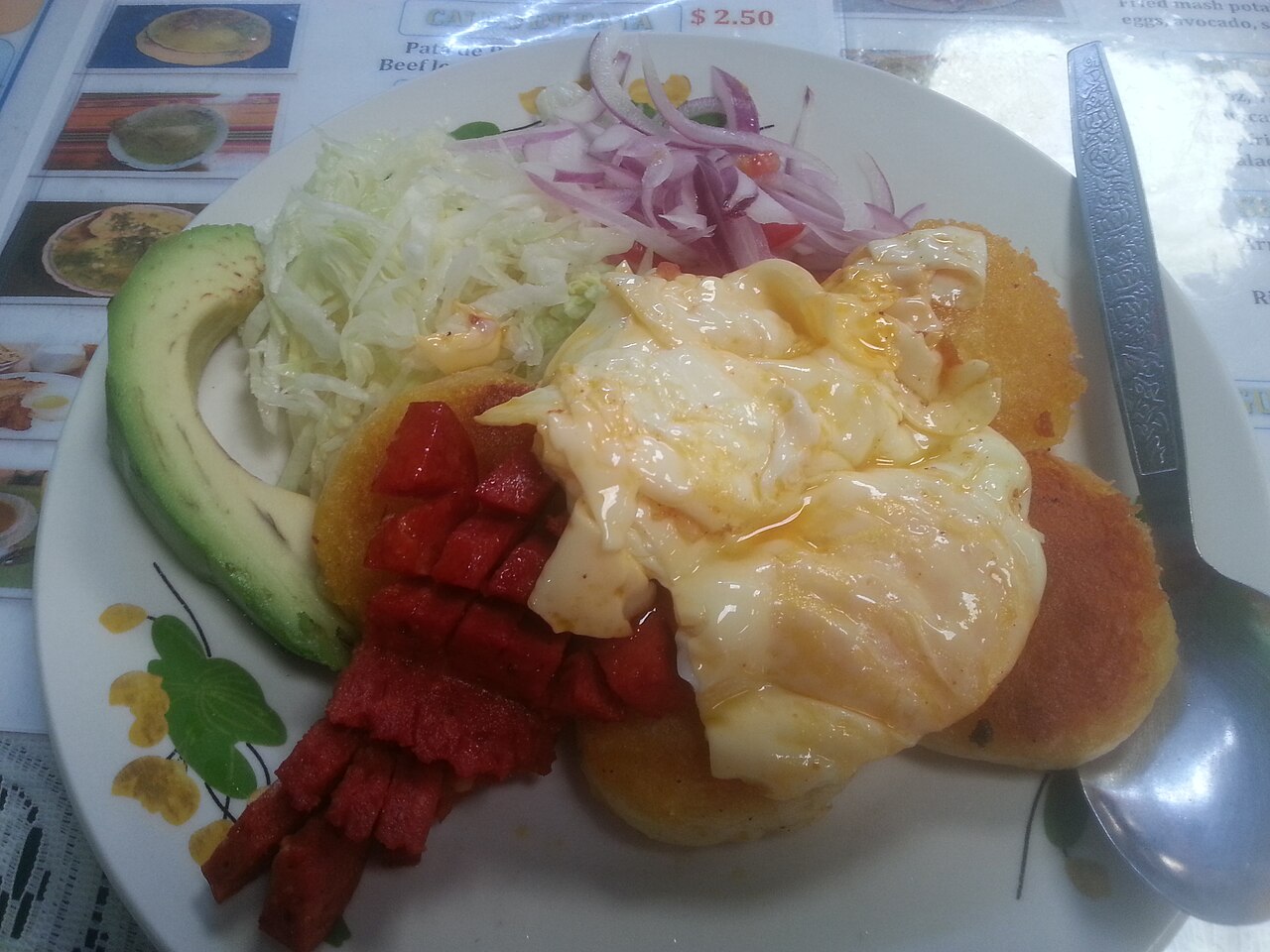
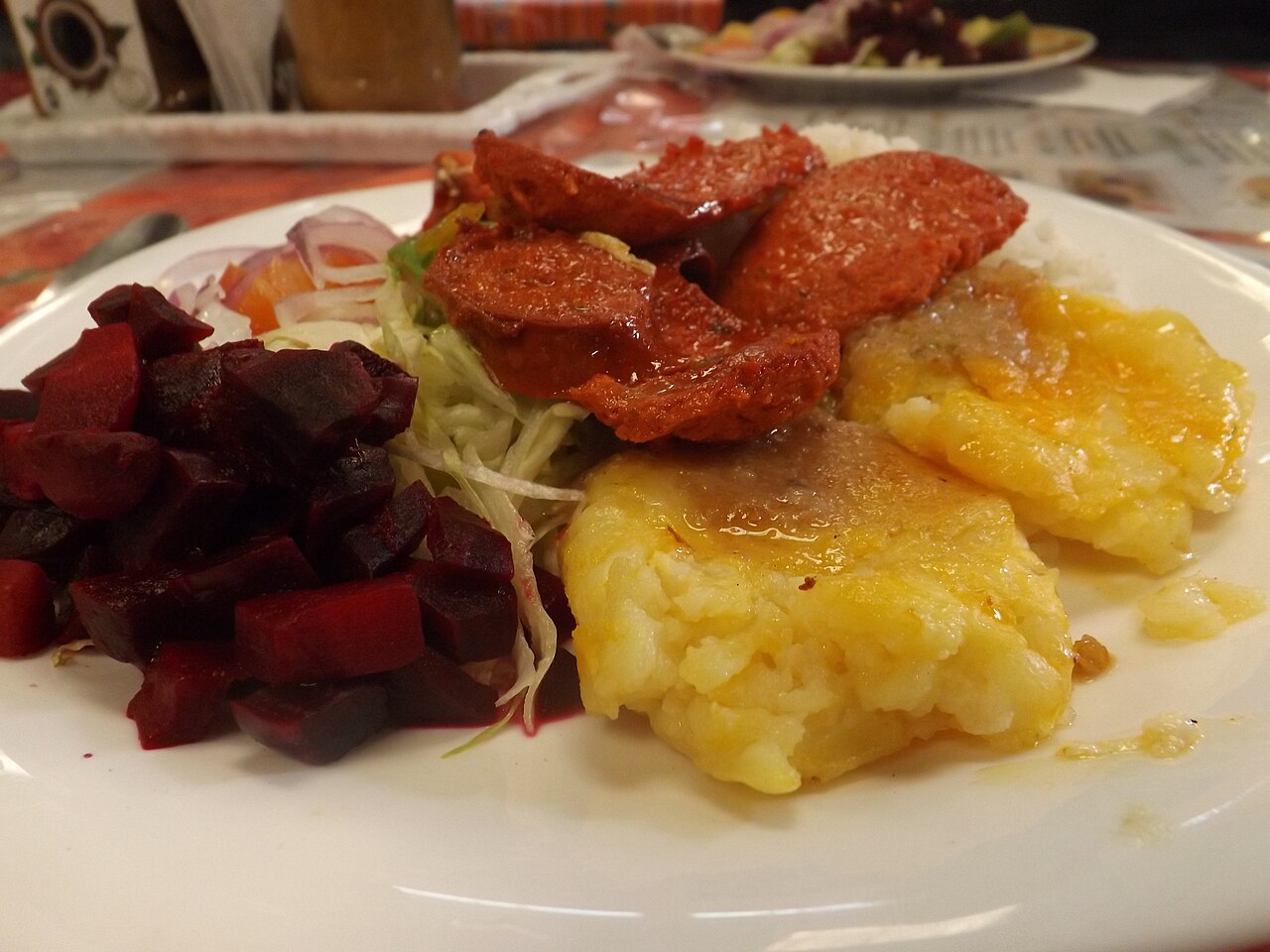
The dish originated in Ambato, Ecuador. The mashed potatoes are seasoned with onion, cumin, and achiote, which gives them a bright orange color. The cheese inside is usually queso fresco. The result is a crispy exterior with a creamy, soft interior and a slight peppery note from the achiote. Llapingachos are often served with baked or fried pork, and sides like avocado, sausage, a fried egg, and a tomato and lettuce salad. They are a well-known part of Ecuadorian highland cuisine but are also popular in coastal and eastern regions of the country.
- origin
- Ecuador
- type
- Fried potato pancake
- main_ingredients
- Mashed potatoes, cheese, onions, cumin, achiote
- common_serving
- With salsa de maní, pork, avocado, sausage, fried egg, tomato and lettuce salad
- cultural_region
- Ecuadorian Highlands, also coast and eastern provinces
Lore & Background
Llapingachos originated in Ambato, Ecuador. They consist of fried mashed potatoes seasoned with onions, cumin and achiote for a bright orange colour and stuffed with cheese, typically queso fresco. The dish is characterized by its crispy exterior, creamy interior and a peppery hint from the achiote.
Reader's Guide
Llapingachos are a representative icon of Highland food in Ecuador, forming part of the country's culture. They are popular not only in the Highlands but also on the coast and in eastern provinces. The dish is generally served with baked or fried pork, and typically with avocado, sausage, fried egg, tomato and lettuce salad on the side. In Ecuador, llapingachos are sometimes made with mashed, cooked yuca (cassava) instead of potato. The yuca or cassava root used is not to be confused with the similarly spelled yucca, the roots of which are generally not edible. This dish highlights the use of local ingredients like achiote and queso fresco, and its widespread popularity across different regions of Ecuador underscores its significance in the nation's culinary identity.
Did You Know?
- Llapingachos originated in Ambato, Ecuador.
- They are sometimes made with mashed, cooked yuca (cassava) instead of potato.
- The yuca root used is not to be confused with yucca, whose roots are generally not edible.
- Achiote gives llapingachos a bright orange colour and a peppery hint.
A Pillar of General Ecuadorian Cuisine
The llapingacho occupies a specific place in the broader taxonomy of Ecuadorian food. It is cited alongside patacones—green plantain slices fried, mashed, and refried—and seco de chivo, a goat stew, as a representative example of the country's general culinary output. This grouping signals that the llapingacho is not a regional specialty confined to one province but rather a dish that speaks to the national food identity. Ecuadorian cuisine itself is described as an amalgamation drawing from Spanish, Inca, and Amazonian traditions, with lesser influences from Italian, Lebanese, African, Scandinavian, German, English, and Chinese cooking. The llapingacho, as a pan-seared potato ball, sits comfortably within this layered heritage, reflecting the deep-rooted use of the potato in the country's kitchens. Its presence in general listings rather than being tied to a single province like Loja's repe or the coast's ceviche underscores its role as a widely recognized element of Ecuadorian gastronomy.
Rooted in the Starch Tradition
Ecuador is noted for its significant starch consumption, with potato, bread, pasta, rice, and yuca forming the backbone of the national diet. The llapingacho, defined as a pan-seared potato ball, is a direct expression of this starch-centric culinary culture. In the mountainous regions of Ecuador, where potatoes are a traditional accompaniment to proteins like pork, chicken, beef, and cuy, the potato holds a place of prominence on the plate. The broader Ecuadorian table is characterized by carbohydrate-rich pairings: rice with lentils, pasta, or plantain on the coast; rice, maize, or potatoes in the highlands. The llapingacho fits naturally into this pattern of building a dish around a starchy base. Whether it appears in the soup course or the second-dish platter, the potato-based preparation reflects the way Ecuadorian cooking consistently elevates starches to a central role rather than treating them as mere sides.
Within the Three-Course Framework
The llapingacho finds its natural home within the traditional Ecuadorian meal structure, which follows a three-course pattern of sopa, segundo, and a closing dessert with coffee. The second course typically pairs a starch—rice or pasta—with a protein such as beef, poultry, pig, or fish. A pan-seared potato ball like the llapingacho aligns with this starch-and-protein pairing logic, offering a potato-based component that can anchor the plate. In the broader meal context, starches like potato appear in either the soup or the rice platter, meaning the llapingacho could feature in multiple courses. Dinner in Ecuador tends to be lighter, sometimes reduced to coffee or herbal tea with bread, while the main meal carries the weight of the day's nutrition. The llapingacho, as a substantial potato preparation, fits the profile of a dish meant for the principal sitting rather than a light evening close.
A Snapshot of Culinary Diversity
Ecuadorian cuisine is explicitly described as diverse, shifting with altitude and the agricultural conditions that accompany each elevation. The coast favors beef, chicken, and seafood with dishes like ceviche; the highlands center on pork, chicken, beef, and cuy; the rainforest relies heavily on yuca and tropical fruits. Within this mosaic, the llapingacho stands as a pan-seared potato ball that belongs to the general repertoire rather than a single province's signature. It is not the hornado of the mountains, nor the repe of Loja Province, nor the ceviche of the coast. Instead, it occupies a cross-regional space, a preparation that can be found as a recognizable element of Ecuadorian food across the country. This broad applicability reflects the way Ecuadorian cooking, while regionally varied, maintains shared foundational ingredients—particularly the potato—that unify the national table despite the many local variations in protein, preparation, and accompaniment.
Gallery
Frequently Asked Questions
Who is Llapingacho?
Llapingacho is a thick, fried potato cake that originated in Ambato, Ecuador. It is essentially a stuffed pancake: a seasoned mashed-potato shell encasing a core of cheese, then seared on a hot griddle until the outside turns crisp and golden-brown.
What are Llapingacho's powers/role?
Its flavor comes from a mix of mashed potatoes seasoned with onion, cumin, and achiote—the last giving the cake its signature bright-orange color—wrapped around a molten cheese center. In Ecuadorian kitchens it plays the role of a hearty, satisfying main course rather than a side or appetizer.
How does Llapingacho's story end?
The classic 'ending' is a full plate: the cake is served alongside salsa de maní (a peanut sauce), sliced avocado, a fried egg, tomato-and-lettuce salad, and often pork, sausage, or both. That complete presentation is how most Ecuadorians experience the dish at its peak.
Why is Llapingacho important?
Although it was born in Ambato, the recipe has spread across Ecuador's highlands, coast, and eastern provinces, making it a broadly recognized symbol of national cuisine. Its reliance on humble, widely available ingredients—potatoes, cheese, a few spices—has kept it a staple of everyday meals rather than a special-occasion treat.
What's the difference between Llapingacho and its regional 'cousins'?
In parts of Ecuador, cooks swap the mashed potatoes for mashed yuca (cassava), producing a similar but texturally distinct cake. It is worth clarifying that yuca/cassava is a completely different root from the yucca plant, whose roots are generally not edible.
More in Ecuadorian cuisine 25-40
Spotted an error? Know more?
This is a living reference — every entry is fact-audited, and reader corrections feed straight into our audit queue. Suggest an edit · See this site's audit record