
Locro
Hearty Andean stew, national dish of several South American countries.

Wikipedia / Wikimedia Commons
Locro (also spelled lojro, from the Quechua *ruqru*) is a thick stew built around squash or potatoes, rooted in the culinary traditions of Native Andean peoples and widely eaten across the Andes. It counts as a national dish in Peru, Bolivia, Ecuador, Chile, Paraguay, northwestern Argentina, and southwestern Colombia. In a study of 28 traditional Argentine foods, it ranked third in importance.
The dish’s origins go back to the Inca Empire, but because no written records survive from that period, most knowledge comes from secondhand accounts and reports by Spanish observers. The earliest version used potatoes, chili peppers, salt, water, and chuño (freeze-dried potatoes), providing a way for populations to survive on an otherwise low-protein diet.
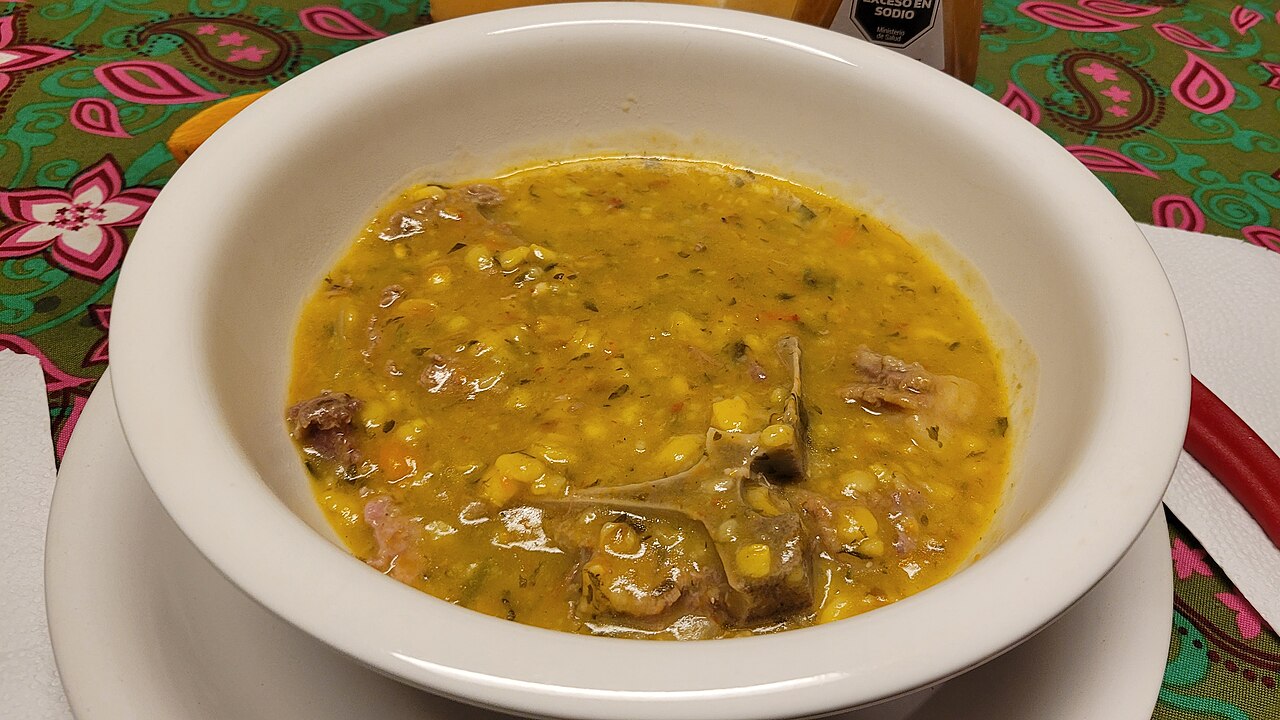
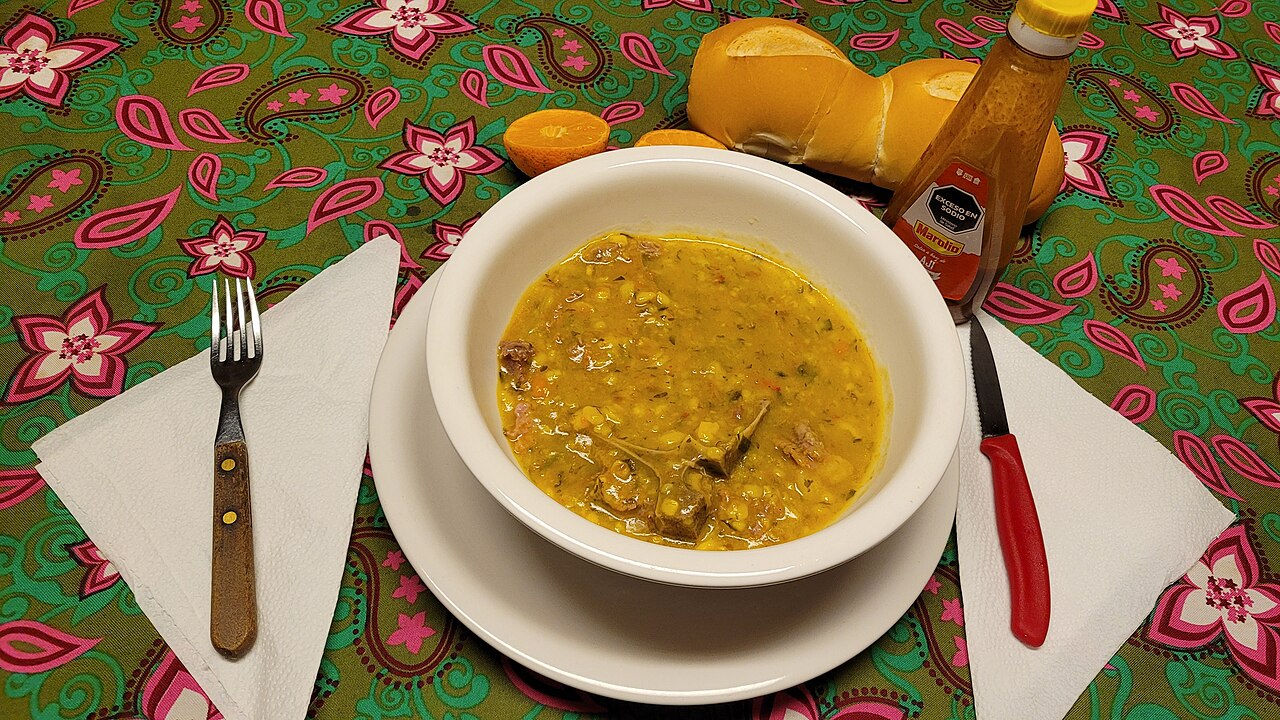
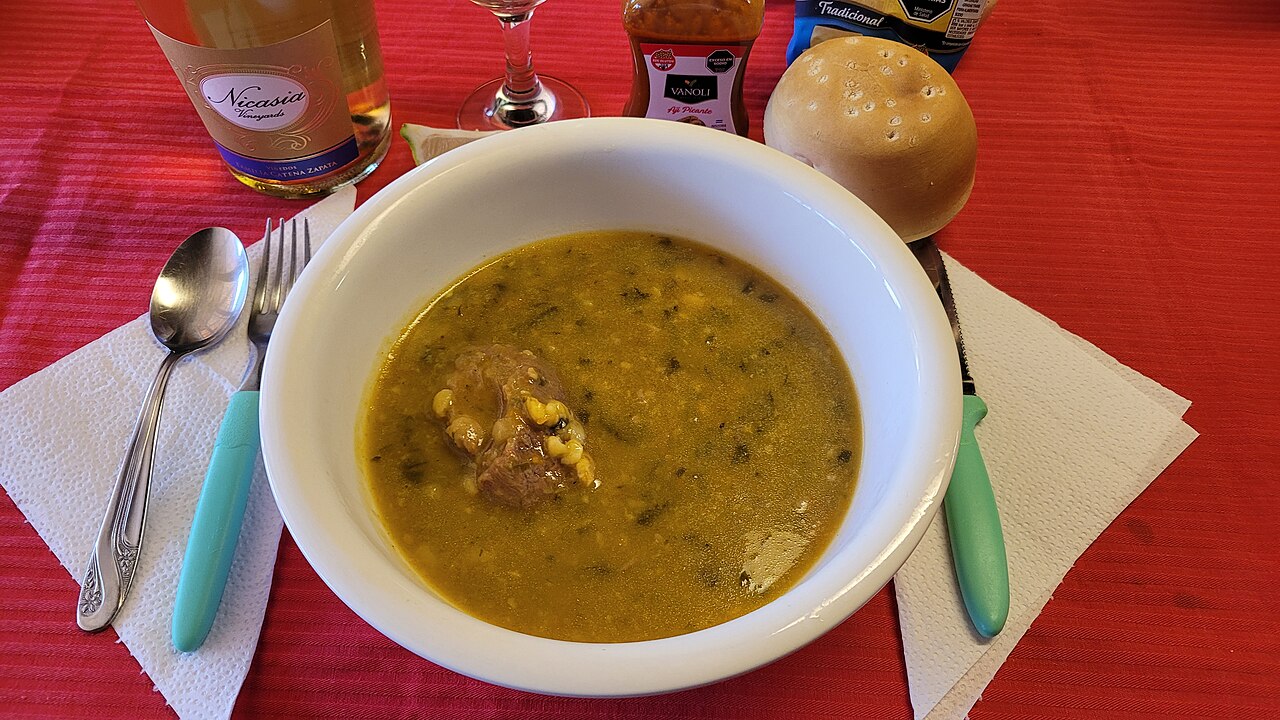
Locro is essentially a soup made from squash, hominy, beans, and potatoes or pumpkin. In some areas, a specific potato called *papa chola* is used; it has a distinct flavor and is hard to find outside its home region. The core ingredients are squash, corn, some kind of meat (usually beef, but also beef jerky or chorizo), and vegetables. Onions, beans, and pumpkin are common additions, and the dish is most often eaten in winter.
Regional variations abound. In Ecuador, *yahuarlocro* includes lamb entrails and blood. Peru’s version is a thick stew with macre pumpkin, potatoes, corn, chili, onions, cheese, and green peas, typically served with white rice; it is traditionally vegetarian, though meat is sometimes added. In Argentina, locro spread from the northwest and Cuyo regions to the rest of the country. In Neuquén province, a pea-based locro is made, while in the northeast, cassava replaces corn. Though its roots are Indigenous, Argentine locro has absorbed European influences over at least three centuries—pork, chorizo, tripe, and various seasonings came from Spanish settlers.
There are several classic types: corn, bean, cassava, and wheat. Skilled cooks often blend two or more of these. The Argentine version follows countless recipes, but the vegetable base and slow cooking over low heat for hours are constant. Meats—fresh or dried beef (charqui), offal (intestines, tripe, ribs, trotters, tail, ears, hide), sausages, pork ribs, and bacon—are cooked separately and added to the vegetables. Pumpkin, especially the round gray *zapallo plomo*, gives the stew its yellow color, along with white corn, beans, and somet
- Origin
- Andes mountain range (Native Andean civilizations)
- Associated countries
- Peru, Bolivia, Ecuador, Chile, Paraguay, Northwest Argentina, Southwestern Colombia
- Historical period
- Dates back to the Inca Empire
- Main ingredients
- Squash, corn, meat (beef, beef jerky, or chorizo), vegetables
- Notable variants
- Yahuarlocro (Ecuador), huaschalocro (poor locro), frangollo (crushed corn)
- Cultural significance
- National dish of Argentina, consumed on patriotic dates (May 25 and July 9)
Lore & Background
The background of Locro dates back to the time of the Inca Empire, though due to the lack of manuscripts from that period, many details stem from hearsay and indirect accounts by Spanish contemporary witnesses. The first version was made of potatoes, chili peppers, salt, water, and chuño, allowing populations to subsist despite a low-protein diet. The dish is a classic squash, hominy, beans, and potato or pumpkin soup, with defining ingredients including squash, corn, meat, and vegetables, varying widely by region.
Reader's Guide
Locro is significant as a traditional Andean stew that has become a national dish in multiple South American countries, particularly Argentina, where it ranks third in a study of traditional gastronomy. Its consumption spread from the Northwest and Cuyo regions to the rest of Argentina, and it is traditionally consumed on May 1, May 25, and July 9, commemorating the May Revolution and Argentine independence. The dish synthesizes European contributions such as pork, chorizos, tripe, and seasonings, while retaining its Indo-American origins. Variants include yahuarlocro in Ecuador (with lamb entrails and blood), Peruvian locro (often vegetarian with macre pumpkin), and Argentine types like frangollo and huaschalocro. It is typically eaten in winter, often paired with red wine like Argentine malbec on cold days or torrontés white wine on warm days. The dish's legacy is tied to the Argentine War of Independence and Gaucho War, where gauchos spread the stew across the country, and it was made official as national food on May 25, 1910.
Did You Know?
- Locro ranks third among 28 different foods in a study regarding traditional Argentine gastronomy.
- In Ecuador, a variant called yahuarlocro incorporates lamb entrails and lamb blood.
- In Argentina, locro is traditionally consumed on May 25 and July 9, patriotic dates.
- The first version of locro was made of potatoes, chili peppers, salt, water, and chuño.
Roots in the Inca World
Locro's origins stretch back to the Inca Empire, a period for which written records are virtually nonexistent. What we know comes largely from the accounts of Spanish contemporaries and oral traditions rather than indigenous manuscripts. The earliest iteration of this stew was remarkably simple: potatoes, chili peppers, salt, water, and chuño, a dehydrated potato product that served as a crucial protein supplement for Andean populations whose diets were otherwise protein-poor. The Quechua word ruqru lives on in the dish's name, a linguistic thread connecting modern kitchens to pre-Columbian foodways. This humble combination sustained mountain communities for generations, and its legacy endures across the entire Andean corridor, from Peru to Colombia, where it remains a cornerstone of national culinary identity in at least seven countries.
A Mosaic of Andean Kitchens
While the core concept of locro, a thick and hearty stew built on squash, corn, and potatoes, unites the Andean region, local interpretations diverge dramatically. In Peru, the dish centers on macre pumpkin and is traditionally vegetarian, incorporating potatoes, corn, chili, onions, cheese, and green peas, typically accompanied by white rice. Ecuador offers yahuarlocro, a bolder variant that folds in lamb entrails and blood. In Argentina, the recipe has absorbed centuries of European influence: pork, chorizo, tripe, and an array of seasonings trace back to Spanish colonial kitchens. The Neuquén province prepares a pea-based version, while the Northeast favors cassava as its starch foundation. Specific potato varieties like papa chola, prized for their distinct flavor, remain largely confined to their native regions, making certain preparations geographically exclusive.
The Architecture of a Stew
The preparation of locro follows a deceptively simple principle: a vegetable base cooked slowly over low heat for hours, allowing starches to build a dense, cream-like body. White corn grains, beans, and wheat form the structural backbone, while a round gray pumpkin called zapallo plomo imparts the dish's signature golden hue. In Argentina, the only truly invariable elements are that vegetable foundation and the patient cooking method; everything else shifts by region. Meats, whether fresh or dried charqui, offal such as intestines and tripe, sausages, or pork ribs, are cooked separately and folded in at the end. A spicy condiment called quiquirimichi, made from oil or fat, ground chili, paprika, green onion, and salt, finishes the plate. When crushed corn grains replace whole ones, the result is called frangollo, a thicker cousin. The dish pairs with Argentine malbec on cold days or a fresh, honeyed torrontés when the weather warms.
From Regional Pot to National Symbol
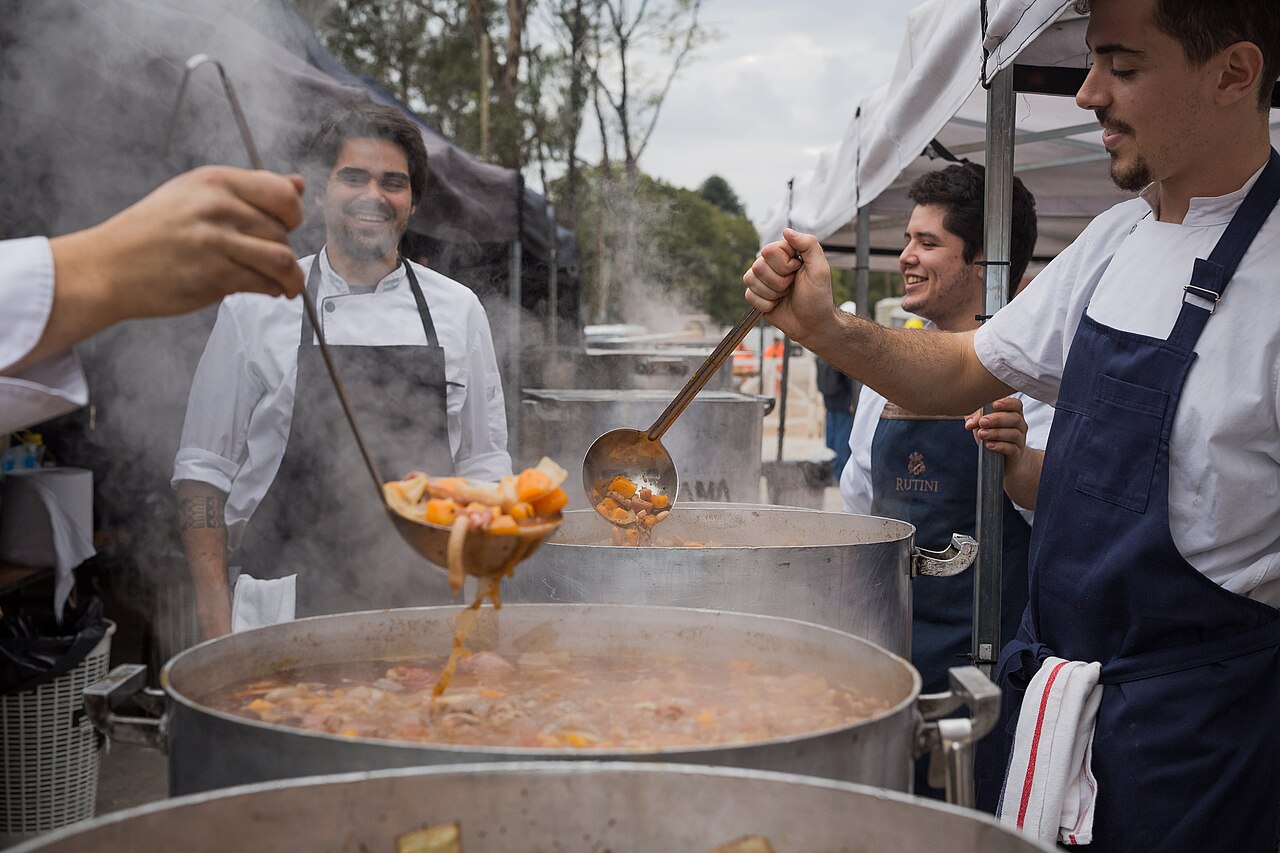
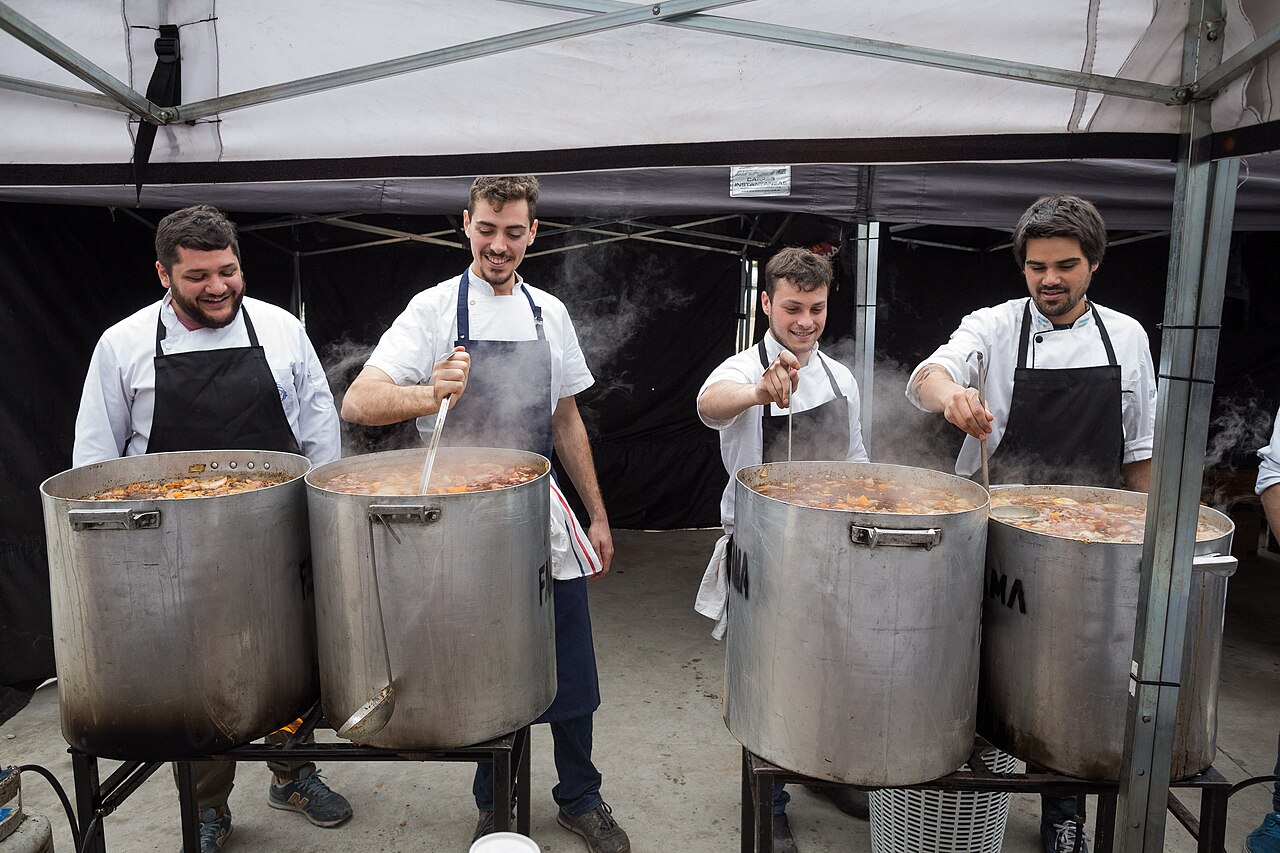
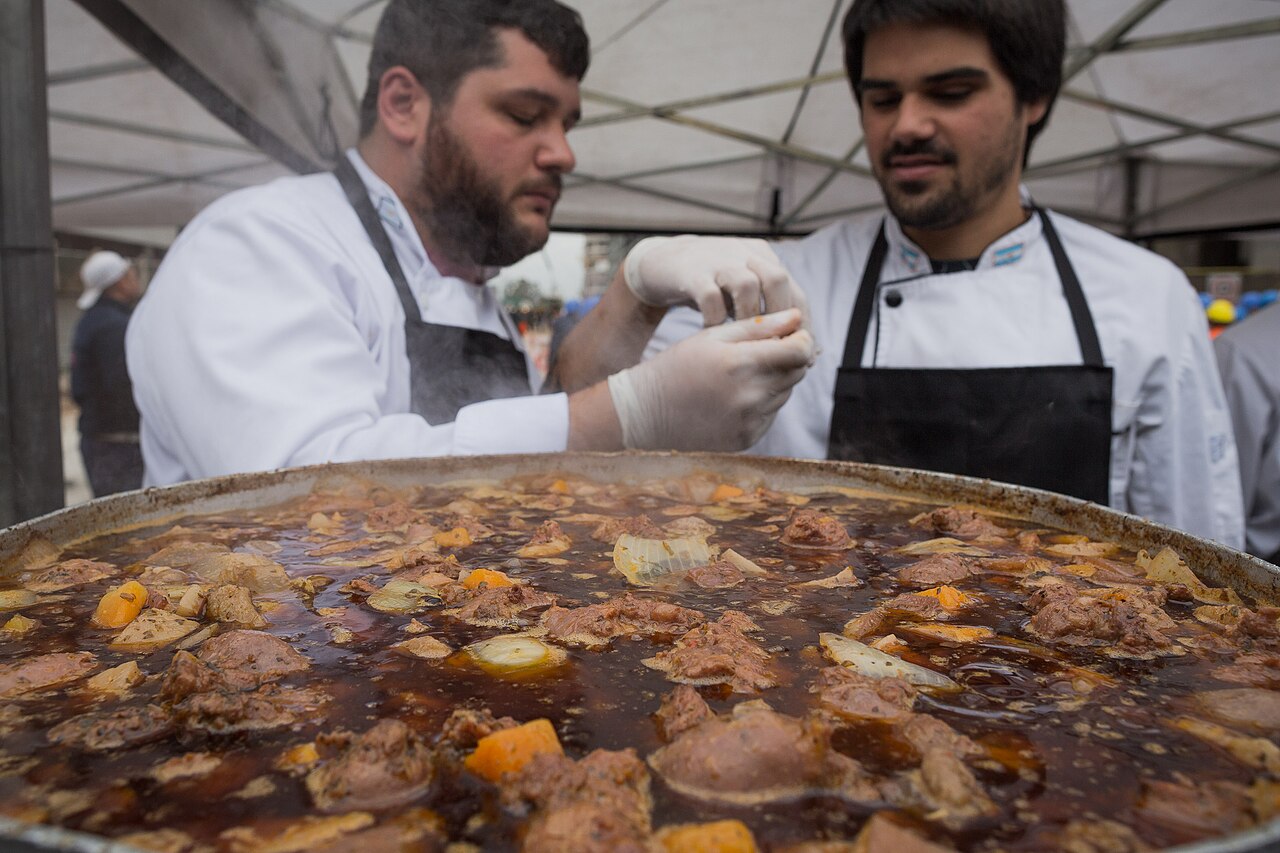
Locro's elevation from a Northwest Argentine staple to a national emblem is inseparable from the country's independence narrative. According to historians like Victor Ego Ducrot, gauchos who served in the Army of the North during the War of Independence carried the stew from the highlands into the Pampas, the litoral, and Cuyo, seeding it across the country. By the centennial of the May Revolution in 1910, locro had effectively become the unofficial national food for patriotic observances, even though no formal legislation codified this status. Today, massive communal servings mark May 1, May 25, commemorating the 1810 revolution, and July 9, the 1816 declaration of independence in San Miguel de Tucumán. Schools serve chocolate infusions and pastries alongside the dish, and families bring small casseroles of locro to weddings. In a study ranking traditional Argentine foods, it placed third among twenty-eight entries, cementing its place in the national gastronomic canon.
Gallery
Frequently Asked Questions
What is Locro?
Locro is a thick, hearty stew centered on squash or potatoes, combined with corn, meat, and vegetables. It is a staple comfort food across the Andean highlands and is considered a national dish in several South American countries, including Ecuador.
Where did Locro come from?
The dish traces back to Native Andean civilizations and the Inca Empire, long before Spanish contact. Its name comes from the Quechua word *ruqru*, reflecting its deep roots in pre-Columbian cooking traditions.
What are Locro's core ingredients?
At its heart, the stew is built around squash or potatoes, with corn, a meat component (beef, beef jerky, or chorizo), and assorted vegetables. The result is a dense, filling bowl that thrives in cold mountain climates.
What's the Ecuadorian twist on Locro?
Ecuador's signature variant is Yahuarlocro, a blood-and-meat version that gives the classic base a distinctly local, richer character. This sets it apart from the simpler potato-and-squash versions found in neighboring Andean countries.
Why is Locro culturally important?
Beyond being a beloved everyday meal, Locro is tied to national identity and patriotic celebrations, notably on May 25 and July 9 in Argentina. Its presence on the tables of Peru, Bolivia, Ecuador, Chile, Paraguay, and parts of Colombia and Argentina underscores its role as a unifying Andean dish.
More in Ecuadorian cuisine 25-40
Spotted an error? Know more?
This is a living reference — every entry is fact-audited, and reader corrections feed straight into our audit queue. Suggest an edit · See this site's audit record